My Life in 24 Hours, Metaphorically Speaking

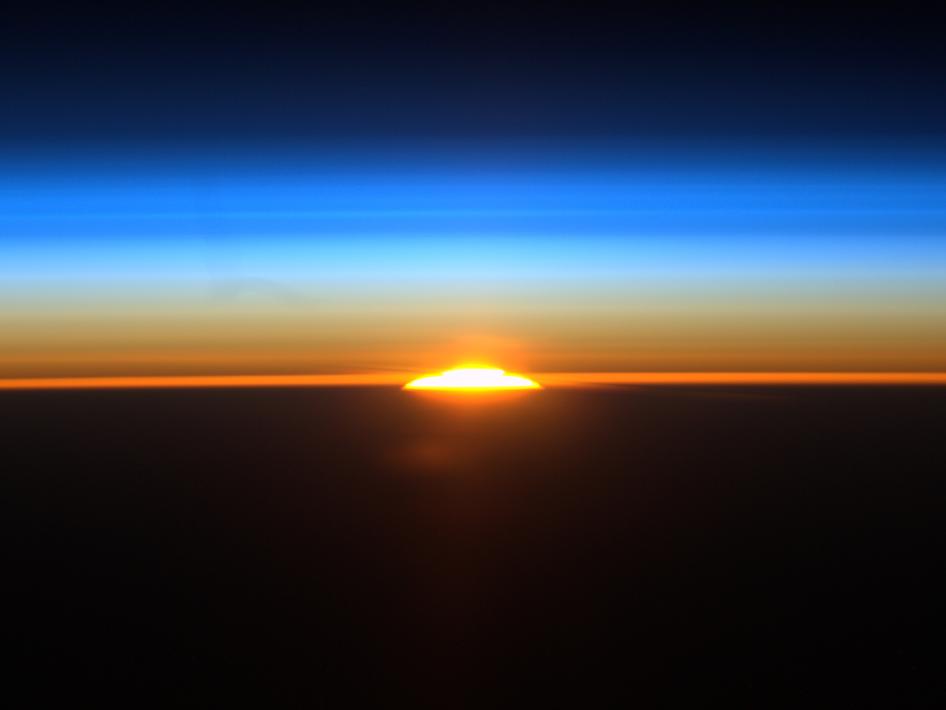
582749main_sunrise_from_iss-4x3_946-710A metaphor is a figure of speech that refers, for rhetorical effect, to one thing by mentioning another thing. It may provide clarity or identify hidden similarities between two ideas. Antithesis, hyperbole, metonymy and simile are all types of metaphor.

Heavenly bodies

The Cambridge dictionary defines heavenly body as any object existing in space, especially a planet, star, or the moon. I like the image of the sun as the Father, moon as the Son, and the stars as the Holy Spirit. These heavenly bodies are always there even when we cannot see them.

In spite of my circumstances, I still feel the challenge to live each day well. My spirituality has undergone a transformation as I look for ways to be grateful for the gift of today.  One such gift has been a shift in perspective.

I used to think of the sunrise and sunset as metaphors for the beginning (birth) and end of life (death). Now, I look at the 24 hour span of a day in a different way. The sunrise marks the beginning of life. The daylight hours represent the part of my life when my spiritual journey was lived in community with other people of faith. I went to church where people saw me and I saw them. My faith and my witness were lived out in the open. My relationship with God and my service to Him was on full display.

Learning To Walk In the Dark

I’ve come to think of the past year as my twilight hours. A transition from public to private spirituality. The sun has set and it is now dark. Yet, the constant companionship of the moon and the stars gives me great comfort. Even though there are occasionally cloudy nights when I can’t see the moon and stars I know they’re there. They are always with me. There is an intimacy to my relationship with God in the privacy of the nighttime that I didn’t experience during the day.

My faith continues to deepen as I enjoy the nighttime hours. The 24 hour cycle will be complete when my life on earth comes to an end. The sun will then rise on my life in heaven.

The Escapist” is a hidden song featured on the album Viva la Vida, by Coldplay.

And in the end
We lie awake
And we dream
We’ll make an escape

And in the end
We lie awake
And we dream
We’ll make an escape
Posted in Inspiring Secular Music, Spiritual Journey | 9 Comments

Happy 50th Anniversary Sgt. Pepper

It was 50 years ago today
Sgt. Pepper hit the USA
Though it’s been around for quite a while
Every listen brings another smile
Today I bring it back to you
The album that you’ve loved for years
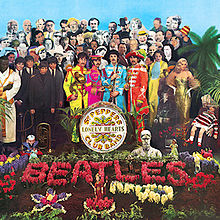
Sgt. Peppers Lonely Hearts Club Band

I was only nine years old when Sgt. Pepper was released. It would be a few more years before I would start listening to the music and exploring the album cover. Certainly I was much too young to understand this landmark album’s historical significance.

The Beatles are undoubtedly my favorite band and Sgt. Pepper is my favorite Beatles album. Because there was not one song on this album released as a single it was best consumed in it’s entirety. This became a way of listening to music that I still prefer to this day.

Listening to Sgt. Pepper this week was a bittersweet experience. On one hand I remembered all the reasons Rolling Stone magazine ranked it number one in its list of the “500 Greatest Albums of All Time“. Professor Kevin J. Dettmar, writing in the Oxford Encyclopedia of British Literature, described it as “the most important and influential rock and roll album ever recorded”.

On the other hand, Sgt. Pepper set the bar so high that no one, not even the Beatles themselves would ever achieve such great heights. Their next experiment, Magical Mystery Tour tried to expand on the concept album idea but despite four number one singles and associated movie it never quite lived up to the expectation established by Sgt. Pepper. The White Album and Abbey Road contain some brilliant individual tracks but neither had the same impact as Sgt. Pepper.

It has been described as one of the first art rock LPs, aiding the development of progressive rock, and credited with marking the beginning of the Album Era. The Beatles made extensive use of alternate forms of instrumentation. Whether it be the clarinet on When I’m Sixty–Four, the sitar on Within You, Without You or strings on She’s Leaving Home.

Enjoy this instrumental version of She’s Leaving Home while you click on the links below to learn more.

Sgt. Peppers Lonely Hearts Club Band is the eighth studio album by English rock band the Beatles. Released on 1 June 1967, it was an immediate commercial and critical success, spending 27 weeks at the top of the albums chart in the United Kingdom and 15 weeks at number one in the United States. The album was recognized for its innovations in music production, songwriting and graphic design, bridging a cultural divide between popular music and legitimate art, and symbolizing the 1960s counterculture. It won four Grammy Awards in 1968, including Album of the Year, the first rock LP to receive this honour.

Sgt. Pepper is regarded by musicologists as an early concept album that advanced the use of extended form in popular music while continuing the artistic maturation seen on the Beatles’ preceding releases. It has been described as one of the first art rock LPs, aiding the development of progressive rock, and credited with marking the beginning of the Album Era. An important work of British psychedelia, the album incorporates a range of stylistic influences, including vaudeville, circus, music hall, avant-garde, and Western and Indian classical music. In 2003, the Library of Congress placed Sgt. Pepper in the National Recording Registry, honouring the work as “culturally, historically, or aesthetically significant”. That same year, Rolling Stone magazine ranked it number one in its list of the “500 Greatest Albums of All Time“. As of 2011, it has sold more than 32 million copies worldwide, making it one of the best-selling albums in history. Professor Kevin J. Dettmar, writing in the Oxford Encyclopedia of British Literature, described it as “the most important and influential rock and roll album ever recorded”. It is the best selling album worldwide of the 1960s.


Posted in Beatles | 1 Comment

American Epic – One of the Greatest-Ever Untold Stories

The third and final episode of AMERICAN EPIC, a three-part historical documentary will air on PBS tonight, Tuesday. May 30 at 8 p.m.

Go inside one of the greatest-ever untold stories: how the ordinary people of America were given the opportunity to make records for the first time. This three-part film, narrated by Robert Redford, melds space, time and technology to reveal the raw roots of American music. Tracing the odyssey of the first recording teams, from the gritty streets of Memphis to the Texas plains and the islands of Hawaii, American Epic captures the breathtaking variety and excitement of their discoveries. Starring: the Carter Family, Memphis Jug Band, Elder J.E. Burch, the Williamson Brothers and Curry, Dick Justice, Charley Patton, Hopi Indian Chanters, Joseph Kekuku, Lydia Mendoza, the Breaux Family, Mississippi John Hurt, and Blind Willie Johnson.

Over three episodes, narrated by Robert Redford, AMERICAN EPIC rescues this history. The remarkable lives of these seminal musicians are revealed through previously unseen film footage and photographs, and exclusive interviews with music pioneers, their families and eyewitnesses to the era.

Episode 103: “Out of the Many, the One”

Exotic cultures spanning America are captured on record for the first time — inventing new instruments and new cultural identities as disparate voices harmonize in a musical melting pot. The myriad threads of America’s musical tapestry include Hopi priests traveling to Washington to defend their sacred snake dance; an 11-year-old Hawaiian boy who invents the steel guitar; a teenage Tejana shaking the border with a ferocious feminist tango learned from a gum wrapper; the fightingest frères on the bayou turning a lament for a pretty blonde into the Cajun national anthem; and a gentle Delta farmer who sings a nostalgic song of his hometown and inspires the greatest rediscovery of the ’60s folk revival. Musicians featured: the Hopi Indian Chanters, Joseph Kekuku, Lydia Mendoza, the Breaux Frères, Mississippi John Hurt, Taj Mahal, Cyril Pahinui, and Louis Michot. Narrated by Robert Redford. 90 minutes.

Posted in Almanac | 1 Comment