1 kings 8:1-9:9 Solomon’s Temple

10_Solomon_Temple_JPEG_1024Carillon de Westminster, Opus 54 No.6, is a piece written for organ by French composer and organist Louis Vierne. It constitutes the sixth piece in the third suite of Vierne’s four-suite set 24 pieces de fantaisie, first published in 1927. Carillon de Westminster is in the key of D major, and is in compound triple time.

Carillon de Westminster, Opus 54 N º 6, es una pieza escrita para órgano del compositor francés Louis Vierne y organista. Constituye la sexta pieza en la tercera serie de cuatro suites de Vierne fijó 24 pedazos de fantaisie, publicado por primera vez en 1927. Carillon de Westminster es en la tonalidad de re mayor, y está en tiempo compuesto triple.

Carillon de Westminster, Opus 54 No.6, è un pezzo scritto per organo dal compositore e organista francese Louis Vierne. Essa costituisce il sesto pezzo della terza suite di quattro suite Vierne set 24 pezzi de Fantaisie, pubblicato la prima volta nel 1927. Carillon de Westminster è nella tonalità di Re maggiore, ed è in tempo ternario composto.

Source: 1 kings 8:1-9:9 1 Reyes 8-9:9(Español)   1 Re 8-9:9(Italiano)

1 Kings 8-9:9

The Ark Brought to the Temple

Then King Solomon summoned into his presence at Jerusalem the elders of Israel, all the heads of the tribes and the chiefs of the Israelite families, to bring up the ark of the Lord’s covenant from Zion, the City of David. All the Israelites came together to King Solomon at the time of the festival in the month of Ethanim, the seventh month.

When all the elders of Israel had arrived, the priests took up the ark, and they brought up the ark of the Lord and the tent of meeting and all the sacred furnishings in it. The priests and Levites carried them up, and King Solomon and the entire assembly of Israel that had gathered about him were before the ark, sacrificing so many sheep and cattle that they could not be recorded or counted.

The priests then brought the ark of the Lord’s covenant to its place in the inner sanctuary of the temple, the Most Holy Place, and put it beneath the wings of the cherubim. The cherubim spread their wings over the place of the ark and overshadowed the ark and its carrying poles. These poles were so long that their ends could be seen from the Holy Place in front of the inner sanctuary, but not from outside the Holy Place; and they are still there today. There was nothing in the ark except the two stone tablets that Moses had placed in it at Horeb, where the Lord made a covenant with the Israelites after they came out of Egypt.

10 When the priests withdrew from the Holy Place, the cloud filled the temple of the Lord. 11 And the priests could not perform their service because of the cloud, for the glory of the Lord filled his temple.

12 Then Solomon said, “The Lord has said that he would dwell in a dark cloud; 13 I have indeed built a magnificent temple for you, a place for you to dwell forever.”

14 While the whole assembly of Israel was standing there, the king turned around and blessed them. 15 Then he said:

“Praise be to the Lord, the God of Israel, who with his own hand has fulfilled what he promised with his own mouth to my father David. For he said, 16 ‘Since the day I brought my people Israel out of Egypt, I have not chosen a city in any tribe of Israel to have a temple built so that my Name might be there, but I have chosenDavid to rule my people Israel.’

17 “My father David had it in his heart to build a temple for the Name of the Lord, the God of Israel. 18 But the Lord said to my father David, ‘You did well to have it in your heart to build a temple for my Name.19 Nevertheless, you are not the one to build the temple, but your son, your own flesh and blood—he is the one who will build the temple for my Name.’

20 “The Lord has kept the promise he made: I have succeeded David my father and now I sit on the throne of Israel, just as the Lord promised, and I have built the temple for the Name of the Lord, the God of Israel. 21 I have provided a place there for the ark, in which is the covenant of the Lord that he made with our ancestors when he brought them out of Egypt.”

Solomon’s Prayer of Dedication

22 Then Solomon stood before the altar of the Lord in front of the whole assembly of Israel, spread out his handstoward heaven 23 and said:

Lord, the God of Israel, there is no God like you in heaven above or on earth below—you who keep your covenant of love with your servants who continue wholeheartedly in your way. 24 You have kept your promise to your servant David my father; with your mouth you have promised and with your hand you have fulfilled it—as it is today.

25 “Now Lord, the God of Israel, keep for your servant David my father the promises you made to him when you said, ‘You shall never fail to have a successor to sit before me on the throne of Israel, if only your descendants are careful in all they do to walk before me faithfully as you have done.’ 26 And now, God of Israel, let your word that you promised your servant David my father come true.

27 “But will God really dwell on earth? The heavens, even the highest heaven, cannot contain you. How much less this temple I have built! 28 Yet give attention to your servant’s prayer and his plea for mercy, Lord my God. Hear the cry and the prayer that your servant is praying in your presence this day. 29 May your eyes be opentoward this temple night and day, this place of which you said, ‘My Name shall be there,’ so that you will hear the prayer your servant prays toward this place. 30 Hear the supplication of your servant and of your people Israel when they pray toward this place. Hear from heaven, your dwelling place, and when you hear, forgive.

31 “When anyone wrongs their neighbor and is required to take an oath and they come and swear the oathbefore your altar in this temple, 32 then hear from heaven and act. Judge between your servants, condemning the guilty by bringing down on their heads what they have done, and vindicating the innocent by treating them in accordance with their innocence.

33 “When your people Israel have been defeated by an enemy because they have sinned against you, and when they turn back to you and give praise to your name, praying and making supplication to you in this temple,34 then hear from heaven and forgive the sin of your people Israel and bring them back to the land you gave to their ancestors.

35 “When the heavens are shut up and there is no rain because your people have sinned against you, and when they pray toward this place and give praise to your name and turn from their sin because you have afflicted them, 36 then hear from heaven and forgive the sin of your servants, your people Israel. Teach them the right wayto live, and send rain on the land you gave your people for an inheritance.

37 “When famine or plague comes to the land, or blight or mildew, locusts or grasshoppers, or when an enemy besieges them in any of their cities, whatever disaster or disease may come, 38 and when a prayer or plea is made by anyone among your people Israel—being aware of the afflictions of their own hearts, and spreading out their hands toward this temple— 39 then hear from heaven, your dwelling place. Forgive and act; deal with everyone according to all they do, since you know their hearts (for you alone know every human heart), 40 so that they will fear you all the time they live in the land you gave our ancestors.

41 “As for the foreigner who does not belong to your people Israel but has come from a distant land because of your name— 42 for they will hear of your great name and your mighty hand and your outstretched arm—when they come and pray toward this temple, 43 then hear from heaven, your dwelling place. Do whatever the foreigner asks of you, so that all the peoples of the earth may know your name and fear you, as do your own people Israel, and may know that this house I have built bears your Name.

44 “When your people go to war against their enemies, wherever you send them, and when they pray to the Lordtoward the city you have chosen and the temple I have built for your Name, 45 then hear from heaven their prayer and their plea, and uphold their cause.

46 “When they sin against you—for there is no one who does not sin—and you become angry with them and give them over to their enemies, who take them captive to their own lands, far away or near; 47 and if they have a change of heart in the land where they are held captive, and repent and plead with you in the land of their captors and say, ‘We have sinned, we have done wrong, we have acted wickedly’; 48 and if they turn back to you with all their heart and soul in the land of their enemies who took them captive, and pray to you toward the land you gave their ancestors, toward the city you have chosen and the temple I have built for your Name; 49 then from heaven, your dwelling place, hear their prayer and their plea, and uphold their cause. 50 And forgive your people, who have sinned against you; forgive all the offenses they have committed against you, and cause their captors to show them mercy; 51 for they are your people and your inheritance, whom you brought out of Egypt, out of that iron-smelting furnace.

52 “May your eyes be open to your servant’s plea and to the plea of your people Israel, and may you listen to them whenever they cry out to you. 53 For you singled them out from all the nations of the world to be your own inheritance, just as you declared through your servant Moses when you, Sovereign Lord, brought our ancestors out of Egypt.”

54 When Solomon had finished all these prayers and supplications to the Lord, he rose from before the altar of the Lord, where he had been kneeling with his hands spread out toward heaven. 55 He stood and blessed the whole assembly of Israel in a loud voice, saying:

56 “Praise be to the Lord, who has given rest to his people Israel just as he promised. Not one word has failed of all the good promises he gave through his servant Moses. 57 May the Lord our God be with us as he was with our ancestors; may he never leave us nor forsake us. 58 May he turn our hearts to him, to walk in obedience to him and keep the commands, decrees and laws he gave our ancestors. 59 And may these words of mine, which I have prayed before the Lord, be near to the Lord our God day and night, that he may uphold the cause of his servant and the cause of his people Israel according to each day’s need, 60 so that all the peoples of the earth may know that the Lord is God and that there is no other. 61 And may your hearts be fully committed to the Lordour God, to live by his decrees and obey his commands, as at this time.”

The Dedication of the Temple

62 Then the king and all Israel with him offered sacrifices before the Lord. 63 Solomon offered a sacrifice of fellowship offerings to the Lord: twenty-two thousand cattle and a hundred and twenty thousand sheep and goats. So the king and all the Israelites dedicated the temple of the Lord.

64 On that same day the king consecrated the middle part of the courtyard in front of the temple of the Lord, and there he offered burnt offerings, grain offerings and the fat of the fellowship offerings, because the bronze altar that stood before the Lord was too small to hold the burnt offerings, the grain offerings and the fat of the fellowship offerings.

65 So Solomon observed the festival at that time, and all Israel with him—a vast assembly, people from Lebo Hamath to the Wadi of Egypt. They celebrated it before the Lord our God for seven days and seven days more, fourteen days in all. 66 On the following day he sent the people away. They blessed the king and then went home, joyful and glad in heart for all the good things the Lord had done for his servant David and his people Israel.

The Lord Appears to Solomon

When Solomon had finished building the temple of the Lord and the royal palace, and had achieved all he had desired to do, the Lord appeared to him a second time, as he had appeared to him at Gibeon. The Lord said to him:

“I have heard the prayer and plea you have made before me; I have consecrated this temple, which you have built, by putting my Name there forever. My eyes and my heart will always be there.

“As for you, if you walk before me faithfully with integrity of heart and uprightness, as David your father did, and do all I command and observe my decrees and laws, I will establish your royal throne over Israel forever, as I promised David your father when I said, ‘You shall never fail to have a successor on the throne of Israel.’

“But if you[a] or your descendants turn away from me and do not observe the commands and decrees I have given you[b] and go off to serve other gods and worship them, then I will cut off Israel from the land I have given them and will reject this temple I have consecrated for my Name. Israel will then become a byword and an object of ridicule among all peoples. This temple will become a heap of rubble. All[c] who pass by will be appalled and will scoff and say, ‘Why has the Lord done such a thing to this land and to this temple?’ People will answer,‘Because they have forsaken the Lord their God, who brought their ancestors out of Egypt, and have embraced other gods, worshiping and serving them—that is why the Lord brought all this disaster on them.’”
Posted in Essential 100 | 1 Comment

1 Kings 2:1-3:28 – King Solomon 

08_Solomon_King_JPEG_1024

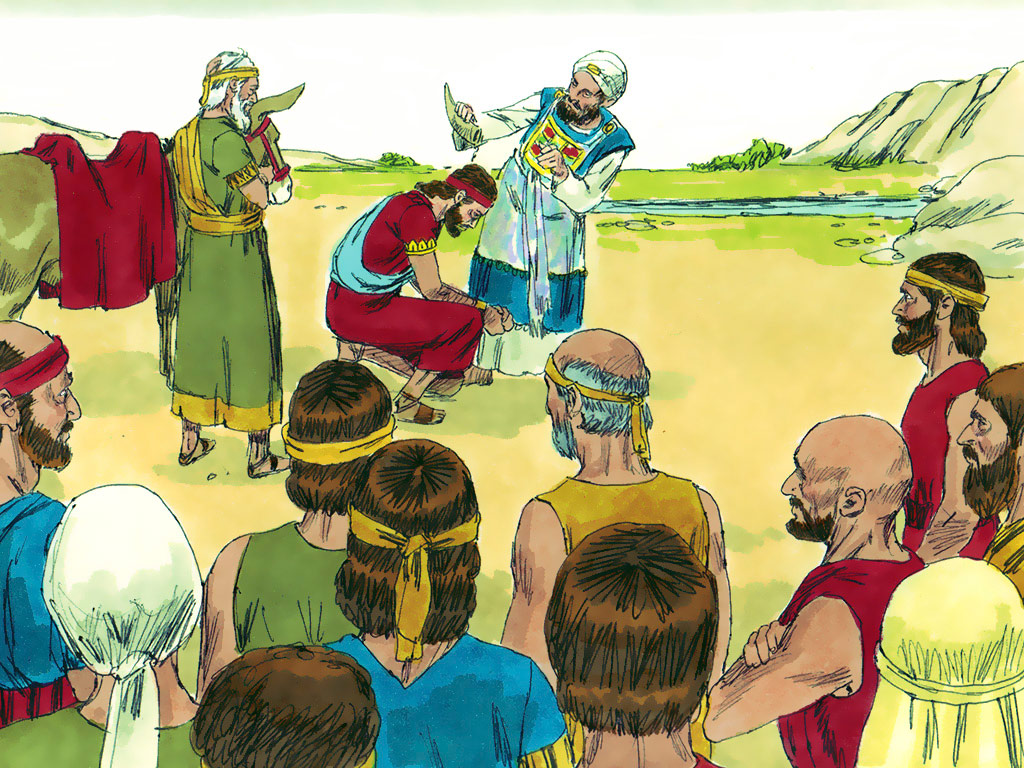
The four anthems The King Shall RejoiceMy Heart is InditingLet thy Hand be Strengthened, and Zadok the Priest were composed by George Frideric Handel for the coronation of King George II in 1727, and are thus known as the Coronation Anthems. Zadok the Priest has been sung at every British coronation during the anointing of the sovereign since 1727. Part of the traditional content of British coronations, the texts for all four anthems were picked by Handel—a personal selection from the most accessible account of an earlier coronation, that of James II in 1685.[1] The text is a translation of the traditional antiphon, Unxerunt Salomonem,[2] itself derived from the biblical account of the anointing of Solomon. These words have been used in every English, and later British, coronation since that of King Edgar at Bath Abbey in 973.

Los cuatro himnos El rey se alegrará, Mi corazón está inditing, Que se fortalecerá tu mano, y Sadoc el sacerdote se compone de Georg Friedrich Handel para la coronación del rey Jorge II en 1727, y por lo tanto se conocen como los Himnos de la coronación. Sadoc el sacerdote ha sido cantada en cada coronación británica durante la unción del soberano desde 1727. Parte del contenido tradicional de coronaciones británicos, los textos de los cuatro himnos fueron recogidos por Handel-una selección personal de la cuenta más accesible de una anterior coronación, la de Jaime II en 1685. [1] El texto es una traducción de la antífona tradicional, Unxerunt Salomonem, [2] en sí deriva del relato bíblico de la unción de Salomón. Estas palabras se han utilizado en cada Inglés, y más tarde, la coronación británica desde la del rey Edgar en la Abadía de Bath, en 973.
I quattro inni Il re gioirà, il mio cuore è Inditing, Sia la tua mano rinforzato, e Zadok the Priest sono stati composti da George Frideric Handel per l’incoronazione di re Giorgio II nel 1727, e sono quindi conosciuti come i Anthems Incoronazione. Zadok the Priest è stato cantato in ogni incoronazione britannica durante l’unzione del sovrano dal 1727. Parte del contenuto tradizionale delle incoronazioni inglesi, i testi per tutti i quattro inni sono stati raccolti da Handel-una selezione personale dal conto più accessibile di un precedente incoronazione, quella di Giacomo II nel 1685. [1] il testo è una traduzione del antifona tradizionale, Unxerunt Salomonem, [2] a sua volta derivato dal racconto biblico della unzione di Salomone. Queste parole sono state utilizzate in ogni inglese, e più tardi britannico, incoronazione da quella di Re Edgar a Bath Abbey a 973.

Source: 1 kings 2:1-3:28   1 Reyes 2-3:28(Español)  1 Re 2-3:28(Italiano)

1 Kings 2-3:28

David’s Charge to Solomon

When the time drew near for David to die, he gave a charge to Solomon his son.

“I am about to go the way of all the earth,” he said. “So be strong, act like a man, and observe what the Lordyour God requires: Walk in obedience to him, and keep his decrees and commands, his laws and regulations, as written in the Law of Moses. Do this so that you may prosper in all you do and wherever you go and that the Lord may keep his promise to me: ‘If your descendants watch how they live, and if they walk faithfully before me with all their heart and soul, you will never fail to have a successor on the throne of Israel.’

“Now you yourself know what Joab son of Zeruiah did to me—what he did to the two commanders of Israel’s armies, Abner son of Ner and Amasa son of Jether. He killed them, shedding their blood in peacetime as if in battle, and with that blood he stained the belt around his waist and the sandals on his feet. Deal with him according to your wisdom, but do not let his gray head go down to the grave in peace.

“But show kindness to the sons of Barzillai of Gilead and let them be among those who eat at your table. They stood by me when I fled from your brother Absalom.

“And remember, you have with you Shimei son of Gera, the Benjamite from Bahurim, who called down bitter curses on me the day I went to Mahanaim. When he came down to meet me at the Jordan, I swore to him by the Lord: ‘I will not put you to death by the sword.’ But now, do not consider him innocent. You are a man of wisdom; you will know what to do to him. Bring his gray head down to the grave in blood.”

10 Then David rested with his ancestors and was buried in the City of David. 11 He had reigned forty years over Israel—seven years in Hebron and thirty-three in Jerusalem. 12 So Solomon sat on the throne of his father David, and his rule was firmly established.

Solomon’s Throne Established

13 Now Adonijah, the son of Haggith, went to Bathsheba, Solomon’s mother. Bathsheba asked him, “Do you come peacefully?”

He answered, “Yes, peacefully.” 14 Then he added, “I have something to say to you.”

“You may say it,” she replied.

15 “As you know,” he said, “the kingdom was mine. All Israel looked to me as their king. But things changed, and the kingdom has gone to my brother; for it has come to him from the Lord. 16 Now I have one request to make of you. Do not refuse me.”

“You may make it,” she said.

17 So he continued, “Please ask King Solomon—he will not refuse you—to give me Abishag the Shunammite as my wife.”

18 “Very well,” Bathsheba replied, “I will speak to the king for you.”

19 When Bathsheba went to King Solomon to speak to him for Adonijah, the king stood up to meet her, bowed down to her and sat down on his throne. He had a throne brought for the king’s mother, and she sat down at his right hand.

20 “I have one small request to make of you,” she said. “Do not refuse me.”

The king replied, “Make it, my mother; I will not refuse you.”

21 So she said, “Let Abishag the Shunammite be given in marriage to your brother Adonijah.”

22 King Solomon answered his mother, “Why do you request Abishag the Shunammite for Adonijah? You might as well request the kingdom for him—after all, he is my older brother—yes, for him and for Abiathar the priest and Joab son of Zeruiah!”

23 Then King Solomon swore by the Lord: “May God deal with me, be it ever so severely, if Adonijah does not pay with his life for this request! 24 And now, as surely as the Lord lives—he who has established me securely on the throne of my father David and has founded a dynasty for me as he promised—Adonijah shall be put to death today!” 25 So King Solomon gave orders to Benaiah son of Jehoiada, and he struck down Adonijah and he died.

26 To Abiathar the priest the king said, “Go back to your fields in Anathoth. You deserve to die, but I will not put you to death now, because you carried the ark of the Sovereign Lord before my father David and shared all my father’s hardships.” 27 So Solomon removed Abiathar from the priesthood of the Lord, fulfilling the word the Lordhad spoken at Shiloh about the house of Eli.

28 When the news reached Joab, who had conspired with Adonijah though not with Absalom, he fled to the tent of the Lord and took hold of the horns of the altar. 29 King Solomon was told that Joab had fled to the tent of the Lord and was beside the altar. Then Solomon ordered Benaiah son of Jehoiada, “Go, strike him down!”

30 So Benaiah entered the tent of the Lord and said to Joab, “The king says, ‘Come out!’”

But he answered, “No, I will die here.”

Benaiah reported to the king, “This is how Joab answered me.”

31 Then the king commanded Benaiah, “Do as he says. Strike him down and bury him, and so clear me and my whole family of the guilt of the innocent blood that Joab shed. 32 The Lord will repay him for the blood he shed,because without my father David knowing it he attacked two men and killed them with the sword. Both of them—Abner son of Ner, commander of Israel’s army, and Amasa son of Jether, commander of Judah’s army—were better men and more upright than he. 33 May the guilt of their blood rest on the head of Joab and his descendants forever. But on David and his descendants, his house and his throne, may there be the Lord’s peace forever.”

34 So Benaiah son of Jehoiada went up and struck down Joab and killed him, and he was buried at his home out in the country. 35 The king put Benaiah son of Jehoiada over the army in Joab’s position and replaced Abiathar with Zadok the priest.

36 Then the king sent for Shimei and said to him, “Build yourself a house in Jerusalem and live there, but do not go anywhere else. 37 The day you leave and cross the Kidron Valley, you can be sure you will die; your blood will be on your own head.”

38 Shimei answered the king, “What you say is good. Your servant will do as my lord the king has said.” And Shimei stayed in Jerusalem for a long time.

39 But three years later, two of Shimei’s slaves ran off to Achish son of Maakah, king of Gath, and Shimei was told, “Your slaves are in Gath.” 40 At this, he saddled his donkey and went to Achish at Gath in search of his slaves. So Shimei went away and brought the slaves back from Gath.

41 When Solomon was told that Shimei had gone from Jerusalem to Gath and had returned, 42 the king summoned Shimei and said to him, “Did I not make you swear by the Lord and warn you, ‘On the day you leave to go anywhere else, you can be sure you will die’? At that time you said to me, ‘What you say is good. I will obey.’ 43 Why then did you not keep your oath to the Lord and obey the command I gave you?”

44 The king also said to Shimei, “You know in your heart all the wrong you did to my father David. Now the Lordwill repay you for your wrongdoing. 45 But King Solomon will be blessed, and David’s throne will remain securebefore the Lord forever.”

46 Then the king gave the order to Benaiah son of Jehoiada, and he went out and struck Shimei down and he died.

The kingdom was now established in Solomon’s hands.

Solomon Asks for Wisdom

Solomon made an alliance with Pharaoh king of Egypt and married his daughter. He brought her to the City of David until he finished building his palace and the temple of the Lord, and the wall around Jerusalem. The people, however, were still sacrificing at the high places, because a temple had not yet been built for the Name of the Lord. Solomon showed his love for the Lord by walking according to the instructions given him by his father David, except that he offered sacrifices and burned incense on the high places.

The king went to Gibeon to offer sacrifices, for that was the most important high place, and Solomon offered a thousand burnt offerings on that altar. At Gibeon the Lord appeared to Solomon during the night in a dream, and God said, “Ask for whatever you want me to give you.”

Solomon answered, “You have shown great kindness to your servant, my father David, because he was faithfulto you and righteous and upright in heart. You have continued this great kindness to him and have given him a son to sit on his throne this very day.

“Now, Lord my God, you have made your servant king in place of my father David. But I am only a little child and do not know how to carry out my duties. Your servant is here among the people you have chosen, a great people, too numerous to count or number. So give your servant a discerning heart to govern your people and to distinguish between right and wrong. For who is able to govern this great people of yours?”

10 The Lord was pleased that Solomon had asked for this. 11 So God said to him, “Since you have asked for this and not for long life or wealth for yourself, nor have asked for the death of your enemies but for discernment in administering justice, 12 I will do what you have asked. I will give you a wise and discerning heart, so that there will never have been anyone like you, nor will there ever be. 13 Moreover, I will give you what you have not asked for—both wealth and honor—so that in your lifetime you will have no equal among kings. 14 And if you walk in obedience to me and keep my decrees and commands as David your father did, I will give you a long life.”15 Then Solomon awoke—and he realized it had been a dream.

He returned to Jerusalem, stood before the ark of the Lord’s covenant and sacrificed burnt offerings and fellowship offerings. Then he gave a feast for all his court.

A Wise Ruling

16 Now two prostitutes came to the king and stood before him. 17 One of them said, “Pardon me, my lord. This woman and I live in the same house, and I had a baby while she was there with me. 18 The third day after my child was born, this woman also had a baby. We were alone; there was no one in the house but the two of us.

19 “During the night this woman’s son died because she lay on him. 20 So she got up in the middle of the night and took my son from my side while I your servant was asleep. She put him by her breast and put her dead son by my breast. 21 The next morning, I got up to nurse my son—and he was dead! But when I looked at him closely in the morning light, I saw that it wasn’t the son I had borne.”

22 The other woman said, “No! The living one is my son; the dead one is yours.”

But the first one insisted, “No! The dead one is yours; the living one is mine.” And so they argued before the king.

23 The king said, “This one says, ‘My son is alive and your son is dead,’ while that one says, ‘No! Your son is dead and mine is alive.’”

24 Then the king said, “Bring me a sword.” So they brought a sword for the king. 25 He then gave an order: “Cut the living child in two and give half to one and half to the other.”

26 The woman whose son was alive was deeply moved out of love for her son and said to the king, “Please, my lord, give her the living baby! Don’t kill him!”

But the other said, “Neither I nor you shall have him. Cut him in two!”

27 Then the king gave his ruling: “Give the living baby to the first woman. Do not kill him; she is his mother.”

28 When all Israel heard the verdict the king had given, they held the king in awe, because they saw that he had wisdom from God to administer justice.

Posted in Essential 100 | Comments Off on 1 Kings 2:1-3:28 – King Solomon 

2 Samuel 11:1 – 12:25 – David and Bathsheba


02_David_Bathsheba_1024_JPEG

Romeo and Juliet, is an orchestral work composed by Pyotr Ilyich Tchaikovsky. It is styled an Overture-Fantasy, and is based on Shakespeare’s play of the same name. Like other composers such as Berlioz and Prokofiev, Tchaikovsky was deeply inspired by Shakespeare and wrote works based on The Tempest and Hamlet as well.

Romeo y Julieta, es una obra para orquesta compuesta por Pyotr Ilyich Tchaikovsky. Está labrado una obertura-fantasía, y se basa en la obra de Shakespeare del mismo nombre. Al igual que otros compositores como Berlioz y Prokofiev, Tchaikovsky estaba profundamente inspirado en Shakespeare y escribió obras basadas en la tempestad y Hamlet también.

Romeo e Giulietta, è un lavoro orchestrale composta da Pyotr Ilyich Tchaikovsky. Si è in stile un Ouverture-Fantasia, e si basa sul dramma di Shakespeare con lo stesso nome. Come altri compositori come Berlioz e Prokofiev, Tchaikovsky era profondamente ispirato da Shakespeare e scrisse opere basate su The Tempest e Amleto pure.

Source: 2 Samuel 11:1 – 12:25   2 Samuel 11-12:25(Español)  2 Samuele 11-12:25(Italiano)

 2 Samuel 11-12:25

David and Bathsheba

11 In the spring, at the time when kings go off to war, David sent Joab out with the king’s men and the whole Israelite army. They destroyed the Ammonites and besieged Rabbah. But David remained in Jerusalem.

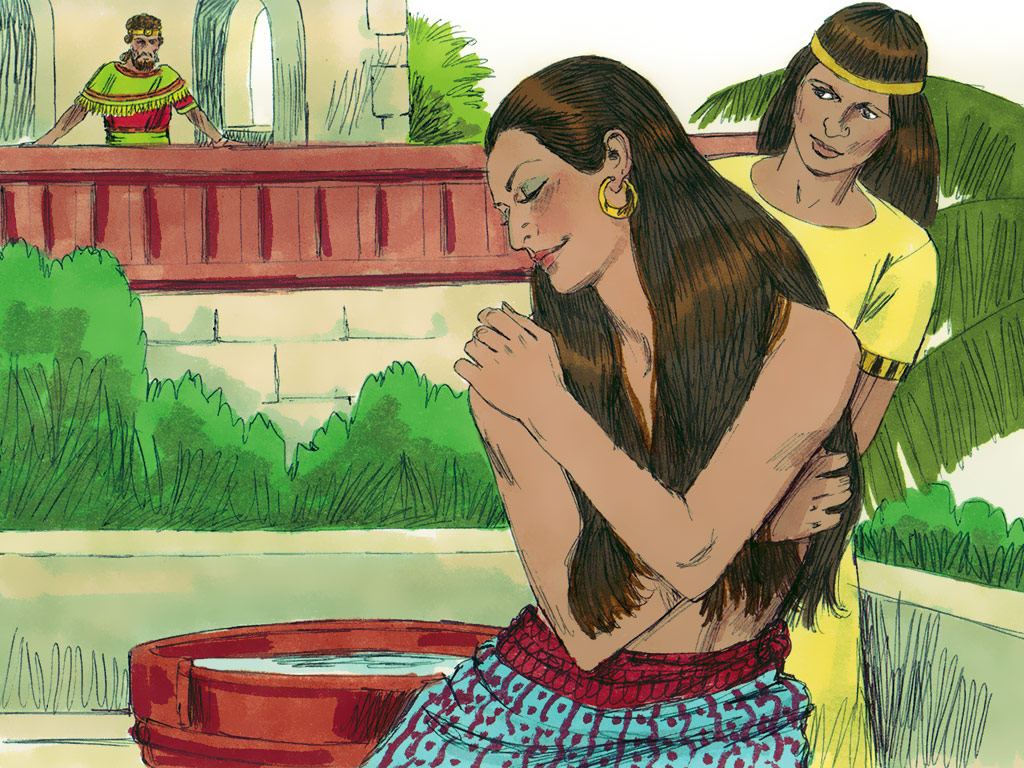
One evening David got up from his bed and walked around on the roof of the palace. From the roof he saw a woman bathing. The woman was very beautiful, and David sent someone to find out about her. The man said, “She is Bathsheba, the daughter of Eliam and the wife of Uriah the Hittite.” Then David sent messengers to get her. She came to him, and he slept with her. (Now she was purifying herself from her monthly uncleanness.) Then she went back home. The woman conceived and sent word to David, saying, “I am pregnant.”

So David sent this word to Joab: “Send me Uriah the Hittite.” And Joab sent him to David. When Uriah came to him, David asked him how Joab was, how the soldiers were and how the war was going. Then David said to Uriah, “Go down to your house and wash your feet.” So Uriah left the palace, and a gift from the king was sent after him. But Uriah slept at the entrance to the palace with all his master’s servants and did not go down to his house.

10 David was told, “Uriah did not go home.” So he asked Uriah, “Haven’t you just come from a military campaign? Why didn’t you go home?”

11 Uriah said to David, “The ark and Israel and Judah are staying in tents,[a] and my commander Joab and my lord’s men are camped in the open country. How could I go to my house to eat and drink and make love to my wife? As surely as you live, I will not do such a thing!”

12 Then David said to him, “Stay here one more day, and tomorrow I will send you back.” So Uriah remained in Jerusalem that day and the next. 13 At David’s invitation, he ate and drank with him, and David made him drunk. But in the evening Uriah went out to sleep on his mat among his master’s servants; he did not go home.

14 In the morning David wrote a letter to Joab and sent it with Uriah. 15 In it he wrote, “Put Uriah out in front where the fighting is fiercest. Then withdraw from him so he will be struck down and die.”

16 So while Joab had the city under siege, he put Uriah at a place where he knew the strongest defenders were.17 When the men of the city came out and fought against Joab, some of the men in David’s army fell; moreover, Uriah the Hittite died.

18 Joab sent David a full account of the battle. 19 He instructed the messenger: “When you have finished giving the king this account of the battle, 20 the king’s anger may flare up, and he may ask you, ‘Why did you get so close to the city to fight? Didn’t you know they would shoot arrows from the wall? 21 Who killed Abimelek son of Jerub-Besheth[b]? Didn’t a woman drop an upper millstone on him from the wall, so that he died in Thebez? Why did you get so close to the wall?’ If he asks you this, then say to him, ‘Moreover, your servant Uriah the Hittite is dead.’”

22 The messenger set out, and when he arrived he told David everything Joab had sent him to say. 23 The messenger said to David, “The men overpowered us and came out against us in the open, but we drove them back to the entrance of the city gate. 24 Then the archers shot arrows at your servants from the wall, and some of the king’s men died. Moreover, your servant Uriah the Hittite is dead.”

25 David told the messenger, “Say this to Joab: ‘Don’t let this upset you; the sword devours one as well as another. Press the attack against the city and destroy it.’ Say this to encourage Joab.”

26 When Uriah’s wife heard that her husband was dead, she mourned for him. 27 After the time of mourning was over, David had her brought to his house, and she became his wife and bore him a son. But the thing David had done displeased the Lord.

Nathan Rebukes David

12 The Lord sent Nathan to David. When he came to him, he said, “There were two men in a certain town, one rich and the other poor. The rich man had a very large number of sheep and cattle, but the poor man had nothing except one little ewe lamb he had bought. He raised it, and it grew up with him and his children. It shared his food, drank from his cup and even slept in his arms. It was like a daughter to him.

“Now a traveler came to the rich man, but the rich man refrained from taking one of his own sheep or cattle to prepare a meal for the traveler who had come to him. Instead, he took the ewe lamb that belonged to the poor man and prepared it for the one who had come to him.”

David burned with anger against the man and said to Nathan, “As surely as the Lord lives, the man who did this must die! He must pay for that lamb four times over, because he did such a thing and had no pity.”

Then Nathan said to David, “You are the man! This is what the Lord, the God of Israel, says: ‘I anointed you king over Israel, and I delivered you from the hand of Saul. I gave your master’s house to you, and your master’s wives into your arms. I gave you all Israel and Judah. And if all this had been too little, I would have given you even more.Why did you despise the word of the Lord by doing what is evil in his eyes? You struck down Uriah the Hittite with the sword and took his wife to be your own. You killed him with the sword of the Ammonites. 10 Now, therefore, the sword will never depart from your house, because you despised me and took the wife of Uriah the Hittite to be your own.’

11 “This is what the Lord says: ‘Out of your own household I am going to bring calamity on you. Before your very eyes I will take your wives and give them to one who is close to you, and he will sleep with your wives in broad daylight. 12 You did it in secret, but I will do this thing in broad daylight before all Israel.’”

13 Then David said to Nathan, “I have sinned against the Lord.”

Nathan replied, “The Lord has taken away your sin. You are not going to die. 14 But because by doing this you have shown utter contempt for[c] the Lord, the son born to you will die.”

15 After Nathan had gone home, the Lord struck the child that Uriah’s wife had borne to David, and he became ill.16 David pleaded with God for the child. He fasted and spent the nights lying in sackcloth[d] on the ground. 17 The elders of his household stood beside him to get him up from the ground, but he refused, and he would not eat any food with them.

18 On the seventh day the child died. David’s attendants were afraid to tell him that the child was dead, for they thought, “While the child was still living, he wouldn’t listen to us when we spoke to him. How can we now tell him the child is dead? He may do something desperate.”

19 David noticed that his attendants were whispering among themselves, and he realized the child was dead. “Is the child dead?” he asked.

“Yes,” they replied, “he is dead.”

20 Then David got up from the ground. After he had washed, put on lotions and changed his clothes, he went into the house of the Lord and worshiped. Then he went to his own house, and at his request they served him food, and he ate.

21 His attendants asked him, “Why are you acting this way? While the child was alive, you fasted and wept, but now that the child is dead, you get up and eat!”

22 He answered, “While the child was still alive, I fasted and wept. I thought, ‘Who knows? The Lord may be gracious to me and let the child live.’ 23 But now that he is dead, why should I go on fasting? Can I bring him back again? I will go to him, but he will not return to me.”

24 Then David comforted his wife Bathsheba, and he went to her and made love to her. She gave birth to a son, and they named him Solomon. The Lord loved him; 25 and because the Lord loved him, he sent word through Nathan the prophet to name him Jedidiah.[e]

Posted in Essential 100 | Comments Off on 2 Samuel 11:1 – 12:25 – David and Bathsheba