Sonata for Harp in G major, Wq.139 was composed by C.P.E. Bach. Carl Philipp Emanuel Bach (8 March 1714 – 14 December 1788) was a German Classical period musician and composer, the fifth child and second (surviving) son of Johann Sebastian Bach and Maria Barbara Bach. His second name was given in honor of his godfather Georg Philipp Telemann, a friend of Johann Sebastian Bach.
Sonata para arpa en sol mayor, Wq.139 fue compuesta por CPE Bach. Carl Philipp Emanuel Bach (8 marzo 1714 hasta 14 diciembre 1788) fue un período clásico alemán músico y compositor, el quinto hijo y segundo (sobreviviente) hijo de Johann Sebastian Bach y Maria Barbara Bach. Su segundo nombre fue dado en honor a su padrino Georg Philipp Telemann, amigo de Johann Sebastian Bach.
Sonata per Arpa in sol maggiore, Wq.139 è stata composta da CPE Bach. Carl Philipp Emanuel Bach (8 Marzo 1714 – 14 dicembre 1788) è stato un tedesco classico periodo di musicista e compositore, il quinto figlio e la seconda (superstite) figlio di Johann Sebastian Bach e Maria Barbara Bach. Il suo secondo nome è stato dato in onore del suo padrino Georg Philipp Telemann, un amico di Johann Sebastian Bach.
1 The Lord is my shepherd, I lack nothing. 2 He makes me lie down in green pastures, he leads me beside quiet waters, 3 he refreshes my soul. He guides me along the right paths for his name’s sake. 4 Even though I walk through the darkest valley,[a] I will fear no evil, for you are with me; your rod and your staff, they comfort me.
5 You prepare a table before me in the presence of my enemies. You anoint my head with oil; my cup overflows. 6 Surely your goodness and love will follow me all the days of my life, and I will dwell in the house of the Lord forever.
The Rite of Spring is a ballet and orchestral concert work by the Russian composer Igor Stravinsky. When first performed, at the Théâtre des Champs-Élysées on 29 May 1913, the avant-garde nature of the music and choreography caused a sensation and a near-riot in the audience. Although designed as a work for the stage, with specific passages accompanying characters and action, the music achieved equal if not greater recognition as a concert piece, and is widely considered to be one of the most influential musical works of the 20th century.
La consagración de la primavera es un ballet y el trabajo concierto orquestal del compositor ruso Igor Stravinsky. Cuando se realiza en primer lugar, en el Théâtre des Champs-Élysées el 29 de mayo de 1913, el carácter vanguardista de la música y la coreografía causó sensación y casi un motín en la audiencia. Aunque se ha diseñado como una obra para el teatro, con pasajes específicos que acompañan a los personajes y la acción, la música logra igual, si no mayor reconocimiento como una pieza de concierto, y es ampliamente considerado como una de las obras musicales más influyentes del siglo 20.
La Sagra della Primavera è un balletto e l’opera concerto per orchestra del compositore russo Igor Stravinsky. La prima volta eseguito, al Théâtre des Champs-Élysées, il 29 maggio 1913, la natura d’avanguardia della musica e la coreografia ha causato una sensazione e un quasi-rissa tra il pubblico. Sebbene progettato come un’opera per il teatro, con passaggi specifici che accompagnano i personaggi e l’azione, la musica ha raggiunto uguale se non maggiore riconoscimento come un pezzo da concerto, ed è ampiamente considerato come uno dei più influenti opere musicali del 20 ° secolo.
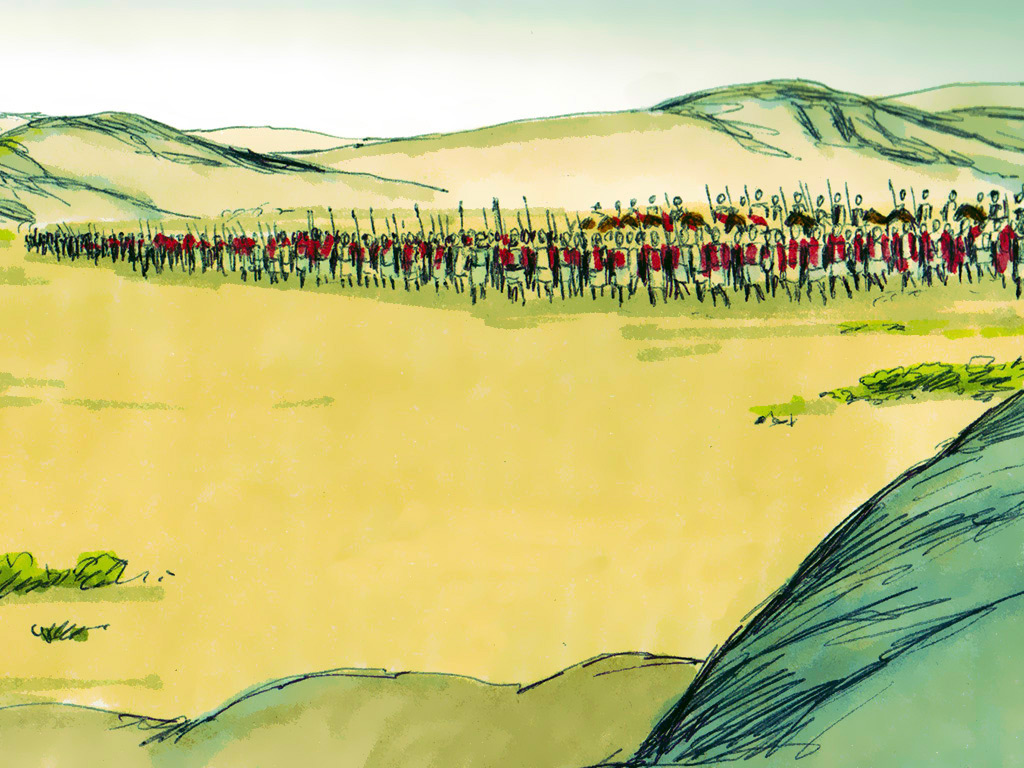
25 So in the ninth year of Zedekiah’s reign, on the tenth day of the tenth month, Nebuchadnezzar king of Babylon marched against Jerusalem with his whole army. He encamped outside the city and built siege works all around it.2 The city was kept under siege until the eleventh year of King Zedekiah.
3 By the ninth day of the fourth[a] month the famine in the city had become so severe that there was no food for the people to eat.4 Then the city wall was broken through, and the whole army fled at night through the gate between the two walls near the king’s garden, though the Babylonians[b] were surrounding the city. They fled toward the Arabah,[c]5 but the Babylonian[d] army pursued the king and overtook him in the plains of Jericho. All his soldiers were separated from him and scattered,6 and he was captured.
He was taken to the king of Babylon at Riblah, where sentence was pronounced on him.7 They killed the sons of Zedekiah before his eyes. Then they put out his eyes, bound him with bronze shackles and took him to Babylon.
8 On the seventh day of the fifth month, in the nineteenth year of Nebuchadnezzar king of Babylon, Nebuzaradan commander of the imperial guard, an official of the king of Babylon, came to Jerusalem.9 He set fire to the temple of the Lord, the royal palace and all the houses of Jerusalem. Every important building he burned down.10 The whole Babylonian army under the commander of the imperial guard broke down the walls around Jerusalem.11 Nebuzaradan the commander of the guard carried into exile the people who remained in the city, along with the rest of the populace and those who had deserted to the king of Babylon.12 But the commander left behind some of the poorest people of the land to work the vineyards and fields.
13 The Babylonians broke up the bronze pillars, the movable stands and the bronze Sea that were at the temple of the Lord and they carried the bronze to Babylon.14 They also took away the pots, shovels, wick trimmers, dishesand all the bronze articles used in the temple service.15 The commander of the imperial guard took away the censers and sprinkling bowls—all that were made of pure gold or silver.
16 The bronze from the two pillars, the Sea and the movable stands, which Solomon had made for the temple of the Lord, was more than could be weighed.17 Each pillar was eighteen cubits[e] high. The bronze capital on top of one pillar was three cubits[f] high and was decorated with a network and pomegranates of bronze all around. The other pillar, with its network, was similar.
18 The commander of the guard took as prisoners Seraiah the chief priest, Zephaniah the priest next in rank and the three doorkeepers.19 Of those still in the city, he took the officer in charge of the fighting men, and five royal advisers. He also took the secretary who was chief officer in charge of conscripting the people of the land and sixty of the conscripts who were found in the city.20 Nebuzaradan the commander took them all and brought them to the king of Babylon at Riblah.21 There at Riblah, in the land of Hamath, the king had them executed.
So Judah went into captivity, away from her land.
22 Nebuchadnezzar king of Babylon appointed Gedaliah son of Ahikam, the son of Shaphan, to be over the people he had left behind in Judah.23 When all the army officers and their men heard that the king of Babylon had appointed Gedaliah as governor, they came to Gedaliah at Mizpah—Ishmael son of Nethaniah, Johanan son of Kareah, Seraiah son of Tanhumeth the Netophathite, Jaazaniah the son of the Maakathite, and their men.24 Gedaliah took an oath to reassure them and their men. “Do not be afraid of the Babylonian officials,” he said. “Settle down in the land and serve the king of Babylon, and it will go well with you.”
25 In the seventh month, however, Ishmael son of Nethaniah, the son of Elishama, who was of royal blood, came with ten men and assassinated Gedaliah and also the men of Judah and the Babylonians who were with him at Mizpah.26 At this, all the people from the least to the greatest, together with the army officers, fled to Egypt for fear of the Babylonians.
Jehoiachin Released
27 In the thirty-seventh year of the exile of Jehoiachin king of Judah, in the year Awel-Marduk became king of Babylon, he released Jehoiachin king of Judah from prison. He did this on the twenty-seventh day of the twelfth month.28 He spoke kindly to him and gave him a seat of honor higher than those of the other kings who were with him in Babylon.29 So Jehoiachin put aside his prison clothes and for the rest of his life ate regularly at the king’s table.30 Day by day the king gave Jehoiachin a regular allowance as long as he lived.
Prelude in G minor, Op. 23, No. 5, is a music piece by Sergei Rachmaninoff, completed in 1901.[1] It was included in his Opus 23 set of ten preludes, despite having been written two years earlier than the other nine. Rachmaninoff himself premiered the piece in Moscow on February 10, 1903, along with Preludes No. 1 and 2 from Op. 23.[2]
Preludio en Sol menor, Op. 23, N ° 5, es una pieza de música de Sergei Rachmaninoff, terminado en 1901. [1] Fue incluido en su Opus 23 conjunto de diez preludios, a pesar de haber sido escrito dos años antes que los otros nueve. El propio Rachmaninoff estrenó la pieza en Moscú el 10 de febrero de 1903, junto con los Preludios nº 1 y 2 de Op. 23.
Preludio in sol minore op. 23, n ° 5, è un pezzo di musica di Sergej Rachmaninoff, completato nel 1901. [1] E ‘stato incluso nel suo Opus 23 set di dieci preludi, nonostante sia stato scritto due anni prima di quanto gli altri nove. Rachmaninoff sé in anteprima il pezzo a Mosca il 10 febbraio 1903, insieme con Preludi n ° 1 e 2 da op. 23.
29 In the thirty-eighth year of Asa king of Judah, Ahab son of Omri became king of Israel, and he reigned in Samaria over Israel twenty-two years.30 Ahab son of Omri did more evil in the eyes of the Lord than any of those before him.31 He not only considered it trivial to commit the sins of Jeroboam son of Nebat, but he also married Jezebel daughter of Ethbaal king of the Sidonians, and began to serve Baal and worship him.32 He set up an altar for Baal in the temple of Baal that he built in Samaria.33 Ahab also made an Asherah pole and did more to arouse the anger of the Lord, the God of Israel, than did all the kings of Israel before him.
34 In Ahab’s time, Hiel of Bethel rebuilt Jericho. He laid its foundations at the cost of his firstborn son Abiram, and he set up its gates at the cost of his youngest son Segub, in accordance with the word of the Lord spoken by Joshua son of Nun.
Elijah Announces a Great Drought
17 Now Elijah the Tishbite, from Tishbe[a] in Gilead, said to Ahab, “As the Lord, the God of Israel, lives, whom I serve, there will be neither dew nor rain in the next few years except at my word.”
Elijah Fed by Ravens
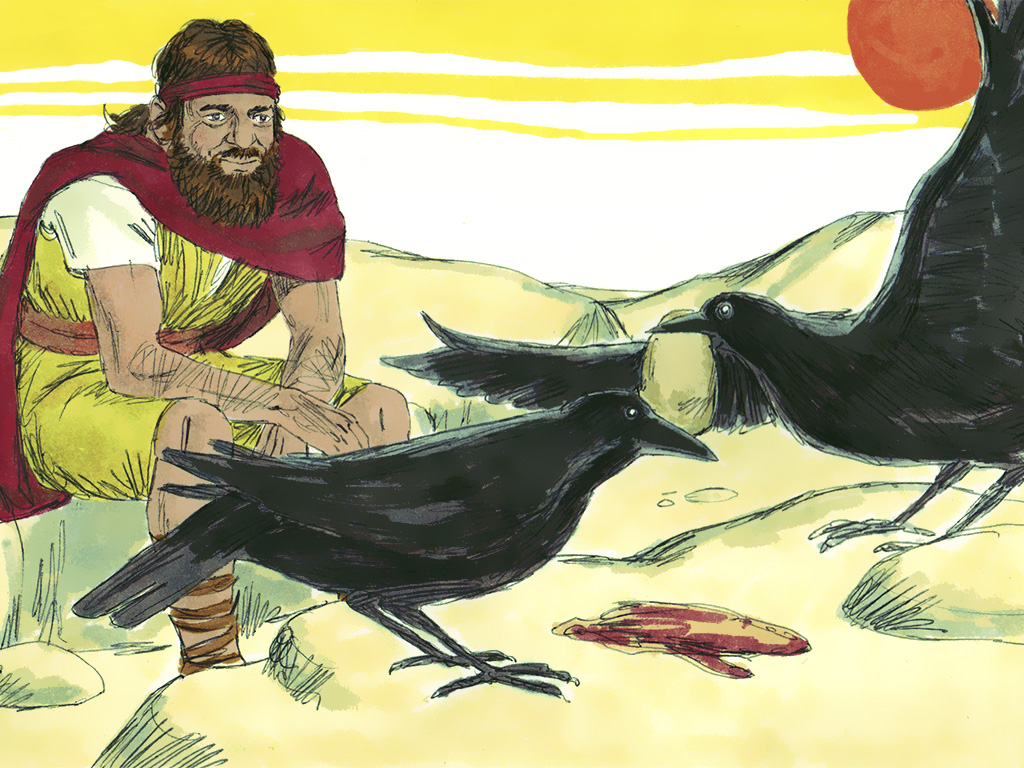
2 Then the word of the Lord came to Elijah:3 “Leave here, turn eastward and hide in the Kerith Ravine, east of the Jordan.4 You will drink from the brook, and I have directed the ravens to supply you with food there.”
5 So he did what the Lord had told him. He went to the Kerith Ravine, east of the Jordan, and stayed there.6 The ravens brought him bread and meat in the morning and bread and meat in the evening, and he drank from the brook.
Elijah and the Widow at Zarephath
7 Some time later the brook dried up because there had been no rain in the land.8 Then the word of the Lord came to him:9 “Go at once to Zarephath in the region of Sidon and stay there. I have directed a widow there to supply you with food.”10 So he went to Zarephath. When he came to the town gate, a widow was there gathering sticks. He called to her and asked, “Would you bring me a little water in a jar so I may have a drink?”11 As she was going to get it, he called, “And bring me, please, a piece of bread.”
12 “As surely as the Lord your God lives,” she replied, “I don’t have any bread—only a handful of flour in a jar and a little olive oil in a jug. I am gathering a few sticks to take home and make a meal for myself and my son, that we may eat it—and die.”
13 Elijah said to her, “Don’t be afraid. Go home and do as you have said. But first make a small loaf of bread for me from what you have and bring it to me, and then make something for yourself and your son.14 For this is what the Lord, the God of Israel, says: ‘The jar of flour will not be used up and the jug of oil will not run dry until the day the Lord sends rain on the land.’”
15 She went away and did as Elijah had told her. So there was food every day for Elijah and for the woman and her family.16 For the jar of flour was not used up and the jug of oil did not run dry, in keeping with the word of the Lordspoken by Elijah.
17 Some time later the son of the woman who owned the house became ill. He grew worse and worse, and finally stopped breathing.18 She said to Elijah, “What do you have against me, man of God? Did you come to remind me of my sin and kill my son?”
19 “Give me your son,” Elijah replied. He took him from her arms, carried him to the upper room where he was staying, and laid him on his bed.20 Then he cried out to the Lord, “Lord my God, have you brought tragedy even on this widow I am staying with, by causing her son to die?”21 Then he stretched himself out on the boy three times and cried out to the Lord, “Lord my God, let this boy’s life return to him!”
22 The Lord heard Elijah’s cry, and the boy’s life returned to him, and he lived.23 Elijah picked up the child and carried him down from the room into the house. He gave him to his mother and said, “Look, your son is alive!”
24 Then the woman said to Elijah, “Now I know that you are a man of God and that the word of the Lord from your mouth is the truth.”
Elijah and Obadiah
18 After a long time, in the third year, the word of the Lord came to Elijah: “Go and present yourself to Ahab, and I will send rain on the land.”2 So Elijah went to present himself to Ahab.
Now the famine was severe in Samaria,3 and Ahab had summoned Obadiah, his palace administrator. (Obadiah was a devout believer in the Lord.4 While Jezebel was killing off the Lord’s prophets, Obadiah had taken a hundred prophets and hidden them in two caves, fifty in each, and had supplied them with food and water.)5 Ahab had said to Obadiah, “Go through the land to all the springs and valleys. Maybe we can find some grass to keep the horses and mules alive so we will not have to kill any of our animals.”6 So they divided the land they were to cover, Ahab going in one direction and Obadiah in another.
7 As Obadiah was walking along, Elijah met him. Obadiah recognized him, bowed down to the ground, and said, “Is it really you, my lord Elijah?”
8 “Yes,” he replied. “Go tell your master, ‘Elijah is here.’”
9 “What have I done wrong,” asked Obadiah, “that you are handing your servant over to Ahab to be put to death?10 As surely as the Lord your God lives, there is not a nation or kingdom where my master has not sent someone to look for you. And whenever a nation or kingdom claimed you were not there, he made them swear they could not find you.11 But now you tell me to go to my master and say, ‘Elijah is here.’12 I don’t know where the Spirit of the Lord may carry you when I leave you. If I go and tell Ahab and he doesn’t find you, he will kill me. Yet I your servant have worshiped the Lord since my youth.13 Haven’t you heard, my lord, what I did while Jezebel was killing the prophets of the Lord? I hid a hundred of the Lord’s prophets in two caves, fifty in each, and supplied them with food and water.14 And now you tell me to go to my master and say, ‘Elijah is here.’ He will kill me!”
15 Elijah said, “As the Lord Almighty lives, whom I serve, I will surely present myself to Ahab today.”
Elijah on Mount Carmel
16 So Obadiah went to meet Ahab and told him, and Ahab went to meet Elijah.17 When he saw Elijah, he said to him, “Is that you, you troubler of Israel?”
18 “I have not made trouble for Israel,” Elijah replied. “But you and your father’s family have. You have abandonedthe Lord’s commands and have followed the Baals.19 Now summon the people from all over Israel to meet me on Mount Carmel. And bring the four hundred and fifty prophets of Baal and the four hundred prophets of Asherah, who eat at Jezebel’s table.”
20 So Ahab sent word throughout all Israel and assembled the prophets on Mount Carmel.21 Elijah went before the people and said, “How long will you waver between two opinions? If the Lord is God, follow him; but if Baal is God, follow him.”
But the people said nothing.
22 Then Elijah said to them, “I am the only one of the Lord’s prophets left, but Baal has four hundred and fifty prophets.23 Get two bulls for us. Let Baal’s prophets choose one for themselves, and let them cut it into pieces and put it on the wood but not set fire to it. I will prepare the other bull and put it on the wood but not set fire to it.24 Then you call on the name of your god, and I will call on the name of the Lord. The god who answers by fire—he is God.”
Then all the people said, “What you say is good.”
25 Elijah said to the prophets of Baal, “Choose one of the bulls and prepare it first, since there are so many of you. Call on the name of your god, but do not light the fire.”26 So they took the bull given them and prepared it.
Then they called on the name of Baal from morning till noon. “Baal, answer us!” they shouted. But there was no response; no one answered. And they danced around the altar they had made.
27 At noon Elijah began to taunt them. “Shout louder!” he said. “Surely he is a god! Perhaps he is deep in thought, or busy, or traveling. Maybe he is sleeping and must be awakened.”28 So they shouted louder and slashedthemselves with swords and spears, as was their custom, until their blood flowed.29 Midday passed, and they continued their frantic prophesying until the time for the evening sacrifice. But there was no response, no one answered, no one paid attention.
30 Then Elijah said to all the people, “Come here to me.” They came to him, and he repaired the altar of the Lord, which had been torn down.31 Elijah took twelve stones, one for each of the tribes descended from Jacob, to whom the word of the Lord had come, saying, “Your name shall be Israel.”32 With the stones he built an altar in the name of the Lord, and he dug a trench around it large enough to hold two seahs[b] of seed.33 He arranged the wood, cut the bull into pieces and laid it on the wood. Then he said to them, “Fill four large jars with water and pour it on the offering and on the wood.”
34 “Do it again,” he said, and they did it again.
“Do it a third time,” he ordered, and they did it the third time.35 The water ran down around the altar and even filled the trench.
36 At the time of sacrifice, the prophet Elijah stepped forward and prayed: “Lord, the God of Abraham, Isaac and Israel, let it be known today that you are God in Israel and that I am your servant and have done all these things at your command.37 Answer me, Lord, answer me, so these people will know that you, Lord, are God, and that you are turning their hearts back again.”
38 Then the fire of the Lord fell and burned up the sacrifice, the wood, the stones and the soil, and also licked up the water in the trench.
39 When all the people saw this, they fell prostrate and cried, “The Lord—he is God! The Lord—he is God!”
40 Then Elijah commanded them, “Seize the prophets of Baal. Don’t let anyone get away!” They seized them, and Elijah had them brought down to the Kishon Valley and slaughtered there.
41 And Elijah said to Ahab, “Go, eat and drink, for there is the sound of a heavy rain.”42 So Ahab went off to eat and drink, but Elijah climbed to the top of Carmel, bent down to the ground and put his face between his knees.
43 “Go and look toward the sea,” he told his servant. And he went up and looked.
“There is nothing there,” he said.
Seven times Elijah said, “Go back.”
44 The seventh time the servant reported, “A cloud as small as a man’s hand is rising from the sea.”
So Elijah said, “Go and tell Ahab, ‘Hitch up your chariot and go down before the rain stops you.’”
45 Meanwhile, the sky grew black with clouds, the wind rose, a heavy rain started falling and Ahab rode off to Jezreel.46 The power of the Lord came on Elijah and, tucking his cloak into his belt, he ran ahead of Ahab all the way to Jezreel.
Elijah Flees to Horeb
19 Now Ahab told Jezebel everything Elijah had done and how he had killed all the prophets with the sword.2 So Jezebel sent a messenger to Elijah to say, “May the gods deal with me, be it ever so severely, if by this time tomorrow I do not make your life like that of one of them.”
3 Elijah was afraid[c] and ran for his life. When he came to Beersheba in Judah, he left his servant there,4 while he himself went a day’s journey into the wilderness. He came to a broom bush, sat down under it and prayed that he might die. “I have had enough, Lord,” he said. “Take my life; I am no better than my ancestors.”5 Then he lay down under the bush and fell asleep.
All at once an angel touched him and said, “Get up and eat.”6 He looked around, and there by his head was some bread baked over hot coals, and a jar of water. He ate and drank and then lay down again.
7 The angel of the Lord came back a second time and touched him and said, “Get up and eat, for the journey is too much for you.”8 So he got up and ate and drank. Strengthened by that food, he traveled forty days and forty nights until he reached Horeb, the mountain of God.9 There he went into a cave and spent the night.
The Lord Appears to Elijah
And the word of the Lord came to him: “What are you doing here, Elijah?”
10 He replied, “I have been very zealous for the Lord God Almighty. The Israelites have rejected your covenant, torn down your altars, and put your prophets to death with the sword. I am the only one left, and now they are trying to kill me too.”
11 The Lord said, “Go out and stand on the mountain in the presence of the Lord, for the Lord is about to pass by.”
Then a great and powerful wind tore the mountains apart and shattered the rocks before the Lord, but the Lordwas not in the wind. After the wind there was an earthquake, but the Lord was not in the earthquake.12 After the earthquake came a fire, but the Lord was not in the fire. And after the fire came a gentle whisper.13 When Elijah heard it, he pulled his cloak over his face and went out and stood at the mouth of the cave.
Then a voice said to him, “What are you doing here, Elijah?”
14 He replied, “I have been very zealous for the Lord God Almighty. The Israelites have rejected your covenant, torn down your altars, and put your prophets to death with the sword. I am the only one left, and now they are trying to kill me too.”
15 The Lord said to him, “Go back the way you came, and go to the Desert of Damascus. When you get there, anoint Hazael king over Aram.16 Also, anoint Jehu son of Nimshi king over Israel, and anoint Elisha son of Shaphat from Abel Meholah to succeed you as prophet.17 Jehu will put to death any who escape the sword of Hazael, and Elisha will put to death any who escape the sword of Jehu.18 Yet I reserve seven thousand in Israel—all whose knees have not bowed down to Baal and whose mouths have not kissed him.”
Share List
Posted inEssential 100|Comments Off on 1 kings 16:29-19:18 – Elijah and the Prophets of Baal

 Sonata for Harp in G major, Wq.139 was composed by C.P.E. Bach. Carl Philipp Emanuel Bach (8 March 1714 – 14 December 1788) was a German Classical period musician and composer, the fifth child and second (surviving) son of Johann Sebastian Bach and Maria Barbara Bach. His second name was given in honor of his godfather Georg Philipp Telemann, a friend of Johann Sebastian Bach.