Life over the Long Haul (Matthew 7)

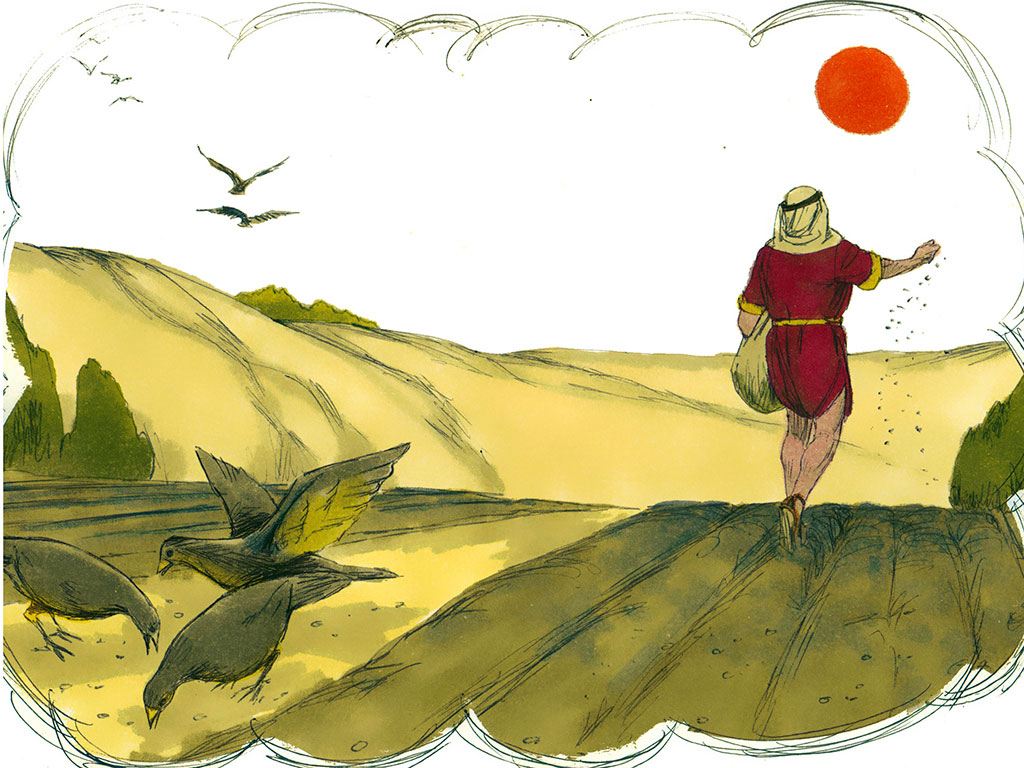
03_Parable_Sower_JPEG_1024The harpsichord concertos are concertos for harpsichord, strings and continuo by Johan Sebastian Bach.

There are:

  • seven complete concertos for a single harpsichord (BWV 1052–1058)
  • three concertos for two harpsichords (BWV 1060–1062)
  • two concertos for three harpsichords (BWV 1063 and 1064), and
  • one concerto for four harpsichords (BWV 1065).

Los conciertos para clavicordio son conciertos para clave, cuerdas y continuo de Johann Sebastian Bach.

Existen:

  • siete conciertos completos para un solo clavicémbalo (BWV 1052-1058)
  • tres conciertos para dos clavicordios (BWV 1060-1062)
  • dos conciertos para tres clavicémbalos (BWV 1063 y 1064), y
  • un concierto para cuatro clavecines (BWV 1065).

Source: Matthew 13  Mateo 13(Español) 

Matthew 13

The Parable of the Sower

13 That same day Jesus went out of the house and sat by the lake. Such large crowds gathered around him that he got into a boat and sat in it, while all the people stood on the shore.

Then he told them many things in parables, saying: “A farmer went out to sow his seed. As he was scattering the seed, some fell along the path, and the birds came and ate it up. Some fell on rocky places, where it did not have much soil. It sprang up quickly, because the soil was shallow. But when the sun came up, the plants were scorched, and they withered because they had no root. Other seed fell among thorns, which grew up and choked the plants. Still other seed fell on good soil, where it produced a crop—a hundred, sixty or thirty times what was sown. Whoever has ears, let them hear.”

10 The disciples came to him and asked, “Why do you speak to the people in parables?”

11 He replied, “Because the knowledge of the secrets of the kingdom of heaven has been given to you, but not to them. 12 Whoever has will be given more, and they will have an abundance. Whoever does not have, even what they have will be taken from them. 13 This is why I speak to them in parables:

“Though seeing, they do not see;
    though hearing, they do not hear or understand.

14 In them is fulfilled the prophecy of Isaiah:

“‘You will be ever hearing but never understanding;
    you will be ever seeing but never perceiving.
15 For this people’s heart has become calloused;
    they hardly hear with their ears,
    and they have closed their eyes.
Otherwise they might see with their eyes,
    hear with their ears,
    understand with their hearts
and turn, and I would heal them.’

16 But blessed are your eyes because they see, and your ears because they hear. 17 For truly I tell you, many prophets and righteous people longed to see what you see but did not see it, and to hear what you hear but did not hear it.

18 “Listen then to what the parable of the sower means: 19 When anyone hears the message about the kingdomand does not understand it, the evil one comes and snatches away what was sown in their heart. This is the seed sown along the path.

20 The seed falling on rocky ground refers to someone who hears the word and at once receives it with joy. 21 But since they have no root, they last only a short time. When trouble or persecution comes because of the word, they quickly fall away. 22 The seed falling among the thorns refers to someone who hears the word, but the worries of this life and the deceitfulness of wealth choke the word, making it unfruitful. 23 But the seed falling on good soil refers to someone who hears the word and understands it. This is the one who produces a crop, yielding a hundred, sixty or thirty times what was sown.”

The Parable of the Weeds

24 Jesus told them another parable: “The kingdom of heaven is like a man who sowed good seed in his field.25 But while everyone was sleeping, his enemy came and sowed weeds among the wheat, and went away.26 When the wheat sprouted and formed heads, then the weeds also appeared.

27 “The owner’s servants came to him and said, ‘Sir, didn’t you sow good seed in your field? Where then did the weeds come from?’

28 “‘An enemy did this,’ he replied.

“The servants asked him, ‘Do you want us to go and pull them up?’

29 “‘No,’ he answered, ‘because while you are pulling the weeds, you may uproot the wheat with them. 30 Let both grow together until the harvest. At that time I will tell the harvesters: First collect the weeds and tie them in bundles to be burned; then gather the wheat and bring it into my barn.’”

The Parables of the Mustard Seed and the Yeast

31 He told them another parable: “The kingdom of heaven is like a mustard seed, which a man took and planted in his field. 32 Though it is the smallest of all seeds, yet when it grows, it is the largest of garden plants and becomes a tree, so that the birds come and perch in its branches.”

33 He told them still another parable: “The kingdom of heaven is like yeast that a woman took and mixed into about sixty pounds[b] of flour until it worked all through the dough.”

34 Jesus spoke all these things to the crowd in parables; he did not say anything to them without using a parable.35 So was fulfilled what was spoken through the prophet:

“I will open my mouth in parables,
    I will utter things hidden since the creation of the world.”[c]

The Parable of the Weeds Explained

36 Then he left the crowd and went into the house. His disciples came to him and said, “Explain to us the parableof the weeds in the field.”

37 He answered, “The one who sowed the good seed is the Son of Man. 38 The field is the world, and the good seed stands for the people of the kingdom. The weeds are the people of the evil one, 39 and the enemy who sows them is the devil. The harvest is the end of the age, and the harvesters are angels.

40 “As the weeds are pulled up and burned in the fire, so it will be at the end of the age. 41 The Son of Man will send out his angels, and they will weed out of his kingdom everything that causes sin and all who do evil. 42 They will throw them into the blazing furnace, where there will be weeping and gnashing of teeth. 43 Then the righteous will shine like the sun in the kingdom of their Father. Whoever has ears, let them hear.

The Parables of the Hidden Treasure and the Pearl

44 “The kingdom of heaven is like treasure hidden in a field. When a man found it, he hid it again, and then in his joy went and sold all he had and bought that field.

45 “Again, the kingdom of heaven is like a merchant looking for fine pearls. 46 When he found one of great value, he went away and sold everything he had and bought it.

The Parable of the Net

47 “Once again, the kingdom of heaven is like a net that was let down into the lake and caught all kinds of fish.48 When it was full, the fishermen pulled it up on the shore. Then they sat down and collected the good fish in baskets, but threw the bad away. 49 This is how it will be at the end of the age. The angels will come and separate the wicked from the righteous 50 and throw them into the blazing furnace, where there will be weeping and gnashing of teeth.

51 “Have you understood all these things?” Jesus asked.

“Yes,” they replied.

52 He said to them, “Therefore every teacher of the law who has become a disciple in the kingdom of heaven is like the owner of a house who brings out of his storeroom new treasures as well as old.”

A Prophet Without Honor

53 When Jesus had finished these parables, he moved on from there. 54 Coming to his hometown, he began teaching the people in their synagogue, and they were amazed. “Where did this man get this wisdom and these miraculous powers?” they asked. 55 “Isn’t this the carpenter’s son? Isn’t his mother’s name Mary, and aren’t his brothers James, Joseph, Simon and Judas? 56 Aren’t all his sisters with us? Where then did this man get all these things?” 57 And they took offense at him.

But Jesus said to them, “A prophet is not without honor except in his own town and in his own home.”

58 And he did not do many miracles there because of their lack of faith.
Posted in Good Book | Comments Off on Life over the Long Haul (Matthew 7)

Why Worry Never Works (Matthew 6)

Albert Hay Malotte (May 19, 1895 – November 16, 1964) was an American pianist, organist, composer and educator.  He is best remembered for a setting of the Lord’s Prayer. Written in 1935, it was recorded by the baritone John Charles Thomas, and remained highly popular for use as a solo in churches and at weddings.

Albert Hay Malotte (19 de mayo de 1895 – 16 de noviembre de 1964) fue un pianista, organista, compositor y educador estadounidense. Él es mejor recordado por un escenario de la Oración del Señor. Escrito en 1935, fue grabado por el barítono John Charles Thomas, y siguió siendo muy popular para su uso como solista en iglesias y en bodas.

Matthew 6

Giving to the Needy

“Be careful not to practice your righteousness in front of others to be seen by them. If you do, you will have no reward from your Father in heaven.

“So when you give to the needy, do not announce it with trumpets, as the hypocrites do in the synagogues and on the streets, to be honored by others. Truly I tell you, they have received their reward in full. But when you give to the needy, do not let your left hand know what your right hand is doing, so that your giving may be in secret. Then your Father, who sees what is done in secret, will reward you.

Prayer

“And when you pray, do not be like the hypocrites, for they love to pray standingin the synagogues and on the street corners to be seen by others. Truly I tell you, they have received their reward in full. But when you pray, go into your room, close the door and pray to your Father, who is unseen. Then your Father, who sees what is done in secret, will reward you. And when you pray, do not keep on babbling like pagans, for they think they will be heard because of their many words. Do not be like them, for your Father knows what you need before you ask him.

“This, then, is how you should pray:

“‘Our Father in heaven,
hallowed be your name,
10 your kingdom come,
your will be done,
    on earth as it is in heaven.
11 Give us today our daily bread.
12 And forgive us our debts,
    as we also have forgiven our debtors.
13 And lead us not into temptation,[a]
    but deliver us from the evil one.[b]

14 For if you forgive other people when they sin against you, your heavenly Father will also forgive you. 15 But if you do not forgive others their sins, your Father will not forgive your sins.

Fasting

16 “When you fast, do not look somber as the hypocrites do, for they disfigure their faces to show others they are fasting. Truly I tell you, they have received their reward in full. 17 But when you fast, put oil on your head and wash your face, 18 so that it will not be obvious to others that you are fasting, but only to your Father, who is unseen; and your Father, who sees what is done in secret, will reward you.

Treasures in Heaven

19 “Do not store up for yourselves treasures on earth, where moths and vermin destroy, and where thieves break in and steal. 20 But store up for yourselves treasures in heaven, where moths and vermin do not destroy, and where thieves do not break in and steal. 21 For where your treasure is, there your heart will be also.

22 “The eye is the lamp of the body. If your eyes are healthy,[c] your whole body will be full of light. 23 But if your eyes are unhealthy,[d] your whole body will be full of darkness. If then the light within you is darkness, how great is that darkness!

24 “No one can serve two masters. Either you will hate the one and love the other, or you will be devoted to the one and despise the other. You cannot serve both God and money.

Do Not Worry

25 “Therefore I tell you, do not worry about your life, what you will eat or drink; or about your body, what you will wear. Is not life more than food, and the body more than clothes? 26 Look at the birds of the air; they do not sow or reap or store away in barns, and yet your heavenly Father feeds them. Are you not much more valuable than they? 27 Can any one of you by worrying add a single hour to your life[e]?

28 “And why do you worry about clothes? See how the flowers of the field grow. They do not labor or spin. 29 Yet I tell you that not even Solomon in all his splendorwas dressed like one of these. 30 If that is how God clothes the grass of the field, which is here today and tomorrow is thrown into the fire, will he not much more clothe you—you of little faith?

31 So do not worry, saying, ‘What shall we eat?’ or ‘What shall we drink?’ or ‘What shall we wear?’ 32 For the pagans run after all these things, and your heavenly Father knows that you need them. 33 But seek first his kingdom and his righteousness, and all these things will be given to you as well. 34 Therefore do not worry about tomorrow, for tomorrow will worry about itself. Each day has enough trouble of its own.

Posted in Good Book | 2 Comments

What Does Jesus Want? (Matthew 5)

08_Parable_Weeds_1024Giuseppe Domenico Scarlatti (26 October 1685 – 23 July 1757) was an Italian composer. He spent much of his life in the service of the Portuguese and Spanish royal families. He is classified primarily as a Baroque composer. However, his music was influential in the development of the Classical style. He was one of the few Baroque composers to transition into the classical period.  Scarlatti composed in a variety of musical forms, although today he is known mainly for his 555 keyboard sonatas.

Giuseppe Domenico Scarlatti (26 de octubre de 1685 – 23 de julio de 1757) fue un compositor italiano. Pasó gran parte de su vida al servicio de las familias reales portuguesas y españolas. Él se clasifica principalmente como un compositor barroco. Sin embargo, su música fue influyente en el desarrollo del estilo clásico. Fue uno de los pocos compositores barrocos en transición al período clásico. Scarlatti compuesto en una variedad de formas musicales, aunque hoy en día es conocido principalmente por sus 555 sonatas con teclado.

Source: Matthew 5  Mateo 5 (Español) 

Matthew 5

The Sermon on the Mount

When Jesus[a] saw the crowds, he went up the mountain; and after he sat down, his disciples came to him. Then he began to speak, and taught them, saying:

The Beatitudes

“Blessed are the poor in spirit, for theirs is the kingdom of heaven.

“Blessed are those who mourn, for they will be comforted.

“Blessed are the meek, for they will inherit the earth.

“Blessed are those who hunger and thirst for righteousness, for they will be filled.

“Blessed are the merciful, for they will receive mercy.

“Blessed are the pure in heart, for they will see God.

“Blessed are the peacemakers, for they will be called children of God.

10 “Blessed are those who are persecuted for righteousness’ sake, for theirs is the kingdom of heaven.

11 “Blessed are you when people revile you and persecute you and utter all kinds of evil against you falsely[b] on my account. 12 Rejoice and be glad, for your reward is great in heaven, for in the same way they persecuted the prophets who were before you.

Salt and Light

13 “You are the salt of the earth; but if salt has lost its taste, how can its saltiness be restored? It is no longer good for anything, but is thrown out and trampled under foot.

14 “You are the light of the world. A city built on a hill cannot be hid. 15 No one after lighting a lamp puts it under the bushel basket, but on the lampstand, and it gives light to all in the house. 16 In the same way, let your light shine before others, so that they may see your good works and give glory to your Father in heaven.

The Law and the Prophets

17 “Do not think that I have come to abolish the law or the prophets; I have come not to abolish but to fulfill. 18 For truly I tell you, until heaven and earth pass away, not one letter,[c] not one stroke of a letter, will pass from the law until all is accomplished. 19 Therefore, whoever breaks[d] one of the least of these commandments, and teaches others to do the same, will be called least in the kingdom of heaven; but whoever does them and teaches them will be called great in the kingdom of heaven. 20 For I tell you, unless your righteousness exceeds that of the scribes and Pharisees, you will never enter the kingdom of heaven.

Concerning Anger

21 “You have heard that it was said to those of ancient times, ‘You shall not murder’; and ‘whoever murders shall be liable to judgment.’ 22 But I say to you that if you are angry with a brother or sister,[e] you will be liable to judgment; and if you insult[f] a brother or sister,[g] you will be liable to the council; and if you say, ‘You fool,’ you will be liable to the hell[h] of fire.

23 So when you are offering your gift at the altar, if you remember that your brother or sister[i] has something against you, 24 leave your gift there before the altar and go; first be reconciled to your brother or sister,[j] and then come and offer your gift. 25 Come to terms quickly with your accuser while you are on the way to court[k] with him, or your accuser may hand you over to the judge, and the judge to the guard, and you will be thrown into prison. 26 Truly I tell you, you will never get out until you have paid the last penny.

Concerning Adultery

27 “You have heard that it was said, ‘You shall not commit adultery.’ 28 But I say to you that everyone who looks at a woman with lust has already committed adultery with her in his heart. 29 If your right eye causes you to sin, tear it out and throw it away; it is better for you to lose one of your members than for your whole body to be thrown into hell.[l] 30 And if your right hand causes you to sin, cut it off and throw it away; it is better for you to lose one of your members than for your whole body to go into hell.[m]

Concerning Divorce

31 “It was also said, ‘Whoever divorces his wife, let him give her a certificate of divorce.’ 32 But I say to you that anyone who divorces his wife, except on the ground of unchastity, causes her to commit adultery. Also whoever marries a divorced woman commits adultery.

Concerning Oaths

33 “Again, you have heard that it was said to those of ancient times, ‘You shall not swear falsely, but carry out the vows you have made to the Lord.’ 34 But I say to you, Do not swear at all, either by heaven, for it is the throne of God, 35 or by the earth, for it is his footstool, or by Jerusalem, for it is the city of the great King. 36 And do not swear by your head, for you cannot make one hair white or black. 37 Let your word be ‘Yes, Yes’ or ‘No, No’; anything more than this comes from the evil one.[n]

Concerning Retaliation

38 “You have heard that it was said, ‘An eye for an eye and a tooth for a tooth.’ 39 But I say to you, Do not resist an evildoer. But if anyone strikes you on the right cheek, turn the other also; 40 and if anyone wants to sue you and take your coat, give your cloak as well; 41 and if anyone forces you to go one mile, go also the second mile. 42 Give to everyone who begs from you, and do not refuse anyone who wants to borrow from you.

Love for Enemies

43 “You have heard that it was said, ‘You shall love your neighbor and hate your enemy.’ 44 But I say to you, Love your enemies and pray for those who persecute you, 45 so that you may be children of your Father in heaven; for he makes his sun rise on the evil and on the good, and sends rain on the righteous and on the unrighteous. 46 For if you love those who love you, what reward do you have? Do not even the tax collectors do the same? 47 And if you greet only your brothers and sisters,[o] what more are you doing than others? Do not even the Gentiles do the same? 48 Therefore, be perfect, as your heavenly Father is perfect.

Posted in Good Book | Comments Off on What Does Jesus Want? (Matthew 5)