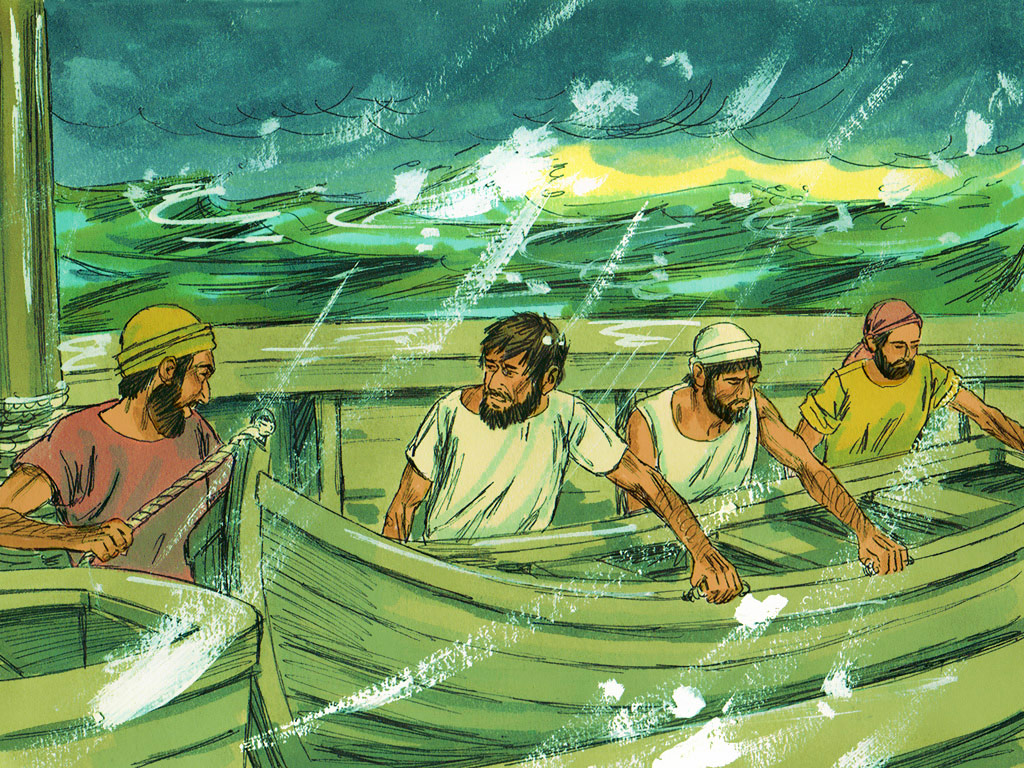
Acts 25:1-28:31 – The Trip to Rome


17_Paul_Shipwrecked_1024Pines of Rome (Italian: Pini di Roma) is a symphonic poem written by the Italian composer Ottorino Respighi in 1924. Each of the four movements depicts pine trees in different locations in Rome at different times of the day.

Pinos de Roma (Italia: Pini di Roma ) es un poema sinfónico escrito por el compositor italiano Ottorino Respighi en 1924. Cada uno de los cuatro movimientos representa pinos en diferentes lugares en Roma en diferentes momentos del día .

Pini di Roma ( italiano : Pini di Roma) è un poema sinfonico scritto dal compositore italiano Ottorino Respighi nel 1924. Ciascuno dei quattro movimenti raffigura alberi di pino in diversi luoghi di Roma in diversi momenti della giornata.

Source: Acts 25:1-28:31  Hechos 25-28(Español)  Atti 25-28(Italiano)

Acts 25-28

Paul’s Trial Before Festus

25 Three days after arriving in the province, Festus went up from Caesarea to Jerusalem, where the chief priests and the Jewish leaders appeared before him and presented the charges against Paul. They requested Festus, as a favor to them, to have Paul transferred to Jerusalem, for they were preparing an ambush to kill him along the way. Festus answered, “Paul is being held at Caesarea, and I myself am going there soon. Let some of your leaders come with me, and if the man has done anything wrong, they can press charges against him there.”

After spending eight or ten days with them, Festus went down to Caesarea. The next day he convened the courtand ordered that Paul be brought before him. When Paul came in, the Jews who had come down from Jerusalem stood around him. They brought many serious charges against him, but they could not prove them.

Then Paul made his defense: “I have done nothing wrong against the Jewish law or against the temple or against Caesar.”

Festus, wishing to do the Jews a favor, said to Paul, “Are you willing to go up to Jerusalem and stand trial before me there on these charges?”

10 Paul answered: “I am now standing before Caesar’s court, where I ought to be tried. I have not done any wrong to the Jews, as you yourself know very well. 11 If, however, I am guilty of doing anything deserving death, I do not refuse to die. But if the charges brought against me by these Jews are not true, no one has the right to hand me over to them. I appeal to Caesar!”

12 After Festus had conferred with his council, he declared: “You have appealed to Caesar. To Caesar you will go!”

Festus Consults King Agrippa

13 A few days later King Agrippa and Bernice arrived at Caesarea to pay their respects to Festus. 14 Since they were spending many days there, Festus discussed Paul’s case with the king. He said: “There is a man here whom Felix left as a prisoner. 15 When I went to Jerusalem, the chief priests and the elders of the Jews brought charges against him and asked that he be condemned.

16 “I told them that it is not the Roman custom to hand over anyone before they have faced their accusers and have had an opportunity to defend themselves against the charges. 17 When they came here with me, I did not delay the case, but convened the court the next day and ordered the man to be brought in. 18 When his accusers got up to speak, they did not charge him with any of the crimes I had expected. 19 Instead, they had some points of dispute with him about their own religion and about a dead man named Jesus who Paul claimed was alive. 20 I was at a loss how to investigate such matters; so I asked if he would be willing to go to Jerusalem and stand trial there on these charges. 21 But when Paul made his appeal to be held over for the Emperor’s decision, I ordered him held until I could send him to Caesar.”

22 Then Agrippa said to Festus, “I would like to hear this man myself.”

He replied, “Tomorrow you will hear him.”

Paul Before Agrippa

23 The next day Agrippa and Bernice came with great pomp and entered the audience room with the high-ranking military officers and the prominent men of the city. At the command of Festus, Paul was brought in. 24 Festus said: “King Agrippa, and all who are present with us, you see this man! The whole Jewish community has petitioned me about him in Jerusalem and here in Caesarea, shouting that he ought not to live any longer. 25 I found he had done nothing deserving of death, but because he made his appeal to the Emperor I decided to send him to Rome.26 But I have nothing definite to write to His Majesty about him. Therefore I have brought him before all of you, and especially before you, King Agrippa, so that as a result of this investigation I may have something to write. 27 For I think it is unreasonable to send a prisoner on to Rome without specifying the charges against him.”

26 Then Agrippa said to Paul, “You have permission to speak for yourself.”

So Paul motioned with his hand and began his defense: “King Agrippa, I consider myself fortunate to stand before you today as I make my defense against all the accusations of the Jews, and especially so because you are well acquainted with all the Jewish customs and controversies. Therefore, I beg you to listen to me patiently.

“The Jewish people all know the way I have lived ever since I was a child, from the beginning of my life in my own country, and also in Jerusalem. They have known me for a long time and can testify, if they are willing, that I conformed to the strictest sect of our religion, living as a Pharisee. And now it is because of my hope in what God has promised our ancestors that I am on trial today. This is the promise our twelve tribes are hoping to see fulfilled as they earnestly serve God day and night. King Agrippa, it is because of this hope that these Jews are accusing me. Why should any of you consider it incredible that God raises the dead?

“I too was convinced that I ought to do all that was possible to oppose the name of Jesus of Nazareth. 10 And that is just what I did in Jerusalem. On the authority of the chief priests I put many of the Lord’s people in prison,and when they were put to death, I cast my vote against them. 11 Many a time I went from one synagogue to another to have them punished, and I tried to force them to blaspheme. I was so obsessed with persecuting them that I even hunted them down in foreign cities.

12 “On one of these journeys I was going to Damascus with the authority and commission of the chief priests.13 About noon, King Agrippa, as I was on the road, I saw a light from heaven, brighter than the sun, blazing around me and my companions. 14 We all fell to the ground, and I heard a voice saying to me in Aramaic,[a] ‘Saul, Saul, why do you persecute me? It is hard for you to kick against the goads.’

15 “Then I asked, ‘Who are you, Lord?’

“ ‘I am Jesus, whom you are persecuting,’ the Lord replied. 16 ‘Now get up and stand on your feet. I have appeared to you to appoint you as a servant and as a witness of what you have seen and will see of me. 17 I will rescue you from your own people and from the Gentiles. I am sending you to them 18 to open their eyes and turn them from darkness to light, and from the power of Satan to God, so that they may receive forgiveness of sinsand a place among those who are sanctified by faith in me.’

19 “So then, King Agrippa, I was not disobedient to the vision from heaven. 20 First to those in Damascus, then to those in Jerusalem and in all Judea, and then to the Gentiles, I preached that they should repent and turn to God and demonstrate their repentance by their deeds. 21 That is why some Jews seized me in the temple courts and tried to kill me. 22 But God has helped me to this very day; so I stand here and testify to small and great alike. I am saying nothing beyond what the prophets and Moses said would happen— 23 that the Messiah would suffer and, as the first to rise from the dead, would bring the message of light to his own people and to the Gentiles.”

24 At this point Festus interrupted Paul’s defense. “You are out of your mind, Paul!” he shouted. “Your great learning is driving you insane.”

25 “I am not insane, most excellent Festus,” Paul replied. “What I am saying is true and reasonable. 26 The king is familiar with these things, and I can speak freely to him. I am convinced that none of this has escaped his notice, because it was not done in a corner. 27 King Agrippa, do you believe the prophets? I know you do.”

28 Then Agrippa said to Paul, “Do you think that in such a short time you can persuade me to be a Christian?”

29 Paul replied, “Short time or long—I pray to God that not only you but all who are listening to me today may become what I am, except for these chains.”

30 The king rose, and with him the governor and Bernice and those sitting with them. 31 After they left the room, they began saying to one another, “This man is not doing anything that deserves death or imprisonment.”

32 Agrippa said to Festus, “This man could have been set free if he had not appealed to Caesar.”

Paul Sails for Rome

27 When it was decided that we would sail for Italy, Paul and some other prisoners were handed over to a centurion named Julius, who belonged to the Imperial Regiment. We boarded a ship from Adramyttium about to sail for ports along the coast of the province of Asia, and we put out to sea. Aristarchus, a Macedonian from Thessalonica, was with us.

The next day we landed at Sidon; and Julius, in kindness to Paul, allowed him to go to his friends so they might provide for his needs. From there we put out to sea again and passed to the lee of Cyprus because the winds were against us. When we had sailed across the open sea off the coast of Cilicia and Pamphylia, we landed at Myra in Lycia. There the centurion found an Alexandrian ship sailing for Italy and put us on board. We made slow headway for many days and had difficulty arriving off Cnidus. When the wind did not allow us to hold our course, we sailed to the lee of Crete, opposite Salmone. We moved along the coast with difficulty and came to a place called Fair Havens, near the town of Lasea.

Much time had been lost, and sailing had already become dangerous because by now it was after the Day of Atonement.[b] So Paul warned them, 10 “Men, I can see that our voyage is going to be disastrous and bring great loss to ship and cargo, and to our own lives also.” 11 But the centurion, instead of listening to what Paul said, followed the advice of the pilot and of the owner of the ship. 12 Since the harbor was unsuitable to winter in, the majority decided that we should sail on, hoping to reach Phoenix and winter there. This was a harbor in Crete,facing both southwest and northwest.

The Storm

13 When a gentle south wind began to blow, they saw their opportunity; so they weighed anchor and sailed along the shore of Crete. 14 Before very long, a wind of hurricane force, called the Northeaster, swept down from the island. 15 The ship was caught by the storm and could not head into the wind; so we gave way to it and were driven along. 16 As we passed to the lee of a small island called Cauda, we were hardly able to make the lifeboatsecure, 17 so the men hoisted it aboard. Then they passed ropes under the ship itself to hold it together. Because they were afraid they would run aground on the sandbars of Syrtis, they lowered the sea anchor[c] and let the ship be driven along. 18 We took such a violent battering from the storm that the next day they began to throw the cargo overboard. 19 On the third day, they threw the ship’s tackle overboard with their own hands. 20 When neither sun nor stars appeared for many days and the storm continued raging, we finally gave up all hope of being saved.

21 After they had gone a long time without food, Paul stood up before them and said: “Men, you should have taken my advice not to sail from Crete; then you would have spared yourselves this damage and loss. 22 But now I urge you to keep up your courage, because not one of you will be lost; only the ship will be destroyed. 23 Last night an angel of the God to whom I belong and whom I serve stood beside me 24 and said, ‘Do not be afraid, Paul. You must stand trial before Caesar; and God has graciously given you the lives of all who sail with you.’25 So keep up your courage, men, for I have faith in God that it will happen just as he told me. 26 Nevertheless, we must run aground on some island.”

The Shipwreck

27 On the fourteenth night we were still being driven across the Adriatic[d] Sea, when about midnight the sailors sensed they were approaching land. 28 They took soundings and found that the water was a hundred and twenty feet[e] deep. A short time later they took soundings again and found it was ninety feet[f] deep. 29 Fearing that we would be dashed against the rocks, they dropped four anchors from the stern and prayed for daylight. 30 In an attempt to escape from the ship, the sailors let the lifeboat down into the sea, pretending they were going to lower some anchors from the bow. 31 Then Paul said to the centurion and the soldiers, “Unless these men stay with the ship, you cannot be saved.” 32 So the soldiers cut the ropes that held the lifeboat and let it drift away.

33 Just before dawn Paul urged them all to eat. “For the last fourteen days,” he said, “you have been in constant suspense and have gone without food—you haven’t eaten anything. 34 Now I urge you to take some food. You need it to survive. Not one of you will lose a single hair from his head.” 35 After he said this, he took some bread and gave thanks to God in front of them all. Then he broke it and began to eat. 36 They were all encouraged and ate some food themselves. 37 Altogether there were 276 of us on board. 38 When they had eaten as much as they wanted, they lightened the ship by throwing the grain into the sea.

39 When daylight came, they did not recognize the land, but they saw a bay with a sandy beach, where they decided to run the ship aground if they could. 40 Cutting loose the anchors, they left them in the sea and at the same time untied the ropes that held the rudders. Then they hoisted the foresail to the wind and made for the beach. 41 But the ship struck a sandbar and ran aground. The bow stuck fast and would not move, and the stern was broken to pieces by the pounding of the surf.

42 The soldiers planned to kill the prisoners to prevent any of them from swimming away and escaping. 43 But the centurion wanted to spare Paul’s life and kept them from carrying out their plan. He ordered those who could swim to jump overboard first and get to land. 44 The rest were to get there on planks or on other pieces of the ship. In this way everyone reached land safely.

Paul Ashore on Malta

28 Once safely on shore, we found out that the island was called Malta. The islanders showed us unusual kindness. They built a fire and welcomed us all because it was raining and cold. Paul gathered a pile of brushwood and, as he put it on the fire, a viper, driven out by the heat, fastened itself on his hand. When the islanders saw the snake hanging from his hand, they said to each other, “This man must be a murderer; for though he escaped from the sea, the goddess Justice has not allowed him to live.” But Paul shook the snake off into the fire and suffered no ill effects. The people expected him to swell up or suddenly fall dead; but after waiting a long time and seeing nothing unusual happen to him, they changed their minds and said he was a god.

There was an estate nearby that belonged to Publius, the chief official of the island. He welcomed us to his home and showed us generous hospitality for three days. His father was sick in bed, suffering from fever and dysentery. Paul went in to see him and, after prayer, placed his hands on him and healed him. When this had happened, the rest of the sick on the island came and were cured. 10 They honored us in many ways; and when we were ready to sail, they furnished us with the supplies we needed.

Paul’s Arrival at Rome

11 After three months we put out to sea in a ship that had wintered in the island—it was an Alexandrian ship with the figurehead of the twin gods Castor and Pollux. 12 We put in at Syracuse and stayed there three days. 13 From there we set sail and arrived at Rhegium. The next day the south wind came up, and on the following day we reached Puteoli. 14 There we found some brothers and sisters who invited us to spend a week with them. And so we came to Rome. 15 The brothers and sisters there had heard that we were coming, and they traveled as far as the Forum of Appius and the Three Taverns to meet us. At the sight of these people Paul thanked God and was encouraged. 16 When we got to Rome, Paul was allowed to live by himself, with a soldier to guard him.

Paul Preaches at Rome Under Guard

17 Three days later he called together the local Jewish leaders. When they had assembled, Paul said to them: “My brothers, although I have done nothing against our people or against the customs of our ancestors, I was arrested in Jerusalem and handed over to the Romans. 18 They examined me and wanted to release me, because I was not guilty of any crime deserving death. 19 The Jews objected, so I was compelled to make an appeal to Caesar. I certainly did not intend to bring any charge against my own people. 20 For this reason I have asked to see you and talk with you. It is because of the hope of Israel that I am bound with this chain.”

21 They replied, “We have not received any letters from Judea concerning you, and none of our people who have come from there has reported or said anything bad about you. 22 But we want to hear what your views are, for we know that people everywhere are talking against this sect.”

23 They arranged to meet Paul on a certain day, and came in even larger numbers to the place where he was staying. He witnessed to them from morning till evening, explaining about the kingdom of God, and from the Law of Moses and from the Prophets he tried to persuade them about Jesus. 24 Some were convinced by what he said, but others would not believe. 25 They disagreed among themselves and began to leave after Paul had made this final statement: “The Holy Spirit spoke the truth to your ancestors when he said through Isaiah the prophet:

26 “‘Go to this people and say,
“You will be ever hearing but never understanding;
    you will be ever seeing but never perceiving.”
27 For this people’s heart has become calloused;
    they hardly hear with their ears,
    and they have closed their eyes.
Otherwise they might see with their eyes,
    hear with their ears,
    understand with their hearts
and turn, and I would heal them.’[g]

28 “Therefore I want you to know that God’s salvation has been sent to the Gentiles, and they will listen!” [29] [h]

30 For two whole years Paul stayed there in his own rented house and welcomed all who came to see him. 31 He proclaimed the kingdom of God and taught about the Lord Jesus Christ—with all boldness and without hindrance!

Posted in Essential 100 | 2 Comments

Acts 16:1-20:38 – More Missionary Journeys

06_Paul_Silas_Prison_1024Pacific 231 is an orchestral work by Arthur Honegger, written in 1923. Honegger was widely known as a train enthusiast, and once notably said: “I have always loved locomotives passionately. For me they are living creatures and I love them as others love women or horses.” It is one of his most frequently performed works.

Pacific 231 es una obra orquestal de Arthur Honegger , escrito en 1923. Honegger fue ampliamente conocido como un entusiasta del tren , y una vez en particular , dijo : . ” Siempre he amado apasionadamente locomotoras Para mí son los seres vivos y los amo como otros aman a las mujeres o caballos “. Es una de sus obras realizadas con más frecuencia.

Pacific 231 è un lavoro orchestrale di Arthur Honegger , scritto nel 1923. Honegger era ampiamente conosciuto come un appassionato di treno , e una volta in particolare ha detto: . “Ho sempre amato le locomotive appassionatamente Per me sono esseri viventi e li amano come gli altri amano le donne o cavalli . ” Si tratta di una delle sue opere più eseguite frequentemente .

Source: Acts 16:1-20:38  Hechos 16-20(Español)  Atti 16-20(Italiano)

Acts 16-20

Timothy Joins Paul and Silas

16 Paul came to Derbe and then to Lystra, where a disciple named Timothy lived, whose mother was Jewish and a believer but whose father was a Greek. The believers at Lystra and Iconium spoke well of him. Paul wanted to take him along on the journey, so he circumcised him because of the Jews who lived in that area, for they all knew that his father was a Greek. As they traveled from town to town, they delivered the decisions reached by the apostles and elders in Jerusalem for the people to obey. So the churches were strengthened in the faith and grew daily in numbers.

Paul’s Vision of the Man of Macedonia

Paul and his companions traveled throughout the region of Phrygia and Galatia, having been kept by the Holy Spirit from preaching the word in the province of Asia. When they came to the border of Mysia, they tried to enter Bithynia, but the Spirit of Jesus would not allow them to. So they passed by Mysia and went down to Troas. During the night Paul had a vision of a man of Macedonia standing and begging him, “Come over to Macedonia and help us.” 10 After Paul had seen the vision, we got ready at once to leave for Macedonia, concluding that God had called us to preach the gospel to them.

Lydia’s Conversion in Philippi

11 From Troas we put out to sea and sailed straight for Samothrace, and the next day we went on to Neapolis.12 From there we traveled to Philippi, a Roman colony and the leading city of that district[a] of Macedonia. And we stayed there several days.

13 On the Sabbath we went outside the city gate to the river, where we expected to find a place of prayer. We sat down and began to speak to the women who had gathered there. 14 One of those listening was a woman from the city of Thyatira named Lydia, a dealer in purple cloth. She was a worshiper of God. The Lord opened her heart to respond to Paul’s message. 15 When she and the members of her household were baptized, she invited us to her home. “If you consider me a believer in the Lord,” she said, “come and stay at my house.” And she persuaded us.

Paul and Silas in Prison

16 Once when we were going to the place of prayer, we were met by a female slave who had a spirit by which she predicted the future. She earned a great deal of money for her owners by fortune-telling. 17 She followed Paul and the rest of us, shouting, “These men are servants of the Most High God, who are telling you the way to be saved.”18 She kept this up for many days. Finally Paul became so annoyed that he turned around and said to the spirit, “In the name of Jesus Christ I command you to come out of her!” At that moment the spirit left her.

19 When her owners realized that their hope of making money was gone, they seized Paul and Silas and draggedthem into the marketplace to face the authorities. 20 They brought them before the magistrates and said, “These men are Jews, and are throwing our city into an uproar 21 by advocating customs unlawful for us Romans to accept or practice.”

22 The crowd joined in the attack against Paul and Silas, and the magistrates ordered them to be stripped and beaten with rods. 23 After they had been severely flogged, they were thrown into prison, and the jailer was commanded to guard them carefully. 24 When he received these orders, he put them in the inner cell and fastened their feet in the stocks.

25 About midnight Paul and Silas were praying and singing hymns to God, and the other prisoners were listening to them. 26 Suddenly there was such a violent earthquake that the foundations of the prison were shaken. At once all the prison doors flew open, and everyone’s chains came loose. 27 The jailer woke up, and when he saw the prison doors open, he drew his sword and was about to kill himself because he thought the prisoners had escaped. 28 But Paul shouted, “Don’t harm yourself! We are all here!”

29 The jailer called for lights, rushed in and fell trembling before Paul and Silas. 30 He then brought them out and asked, “Sirs, what must I do to be saved?”

31 They replied, “Believe in the Lord Jesus, and you will be saved—you and your household.” 32 Then they spoke the word of the Lord to him and to all the others in his house. 33 At that hour of the night the jailer took them and washed their wounds; then immediately he and all his household were baptized. 34 The jailer brought them into his house and set a meal before them; he was filled with joy because he had come to believe in God—he and his whole household.

35 When it was daylight, the magistrates sent their officers to the jailer with the order: “Release those men.” 36 The jailer told Paul, “The magistrates have ordered that you and Silas be released. Now you can leave. Go in peace.”

37 But Paul said to the officers: “They beat us publicly without a trial, even though we are Roman citizens, and threw us into prison. And now do they want to get rid of us quietly? No! Let them come themselves and escort us out.”

38 The officers reported this to the magistrates, and when they heard that Paul and Silas were Roman citizens, they were alarmed. 39 They came to appease them and escorted them from the prison, requesting them to leave the city. 40 After Paul and Silas came out of the prison, they went to Lydia’s house, where they met with the brothers and sisters and encouraged them. Then they left.

In Thessalonica

17 When Paul and his companions had passed through Amphipolis and Apollonia, they came to Thessalonica,where there was a Jewish synagogue. As was his custom, Paul went into the synagogue, and on three Sabbathdays he reasoned with them from the Scriptures, explaining and proving that the Messiah had to suffer and rise from the dead. “This Jesus I am proclaiming to you is the Messiah,” he said. Some of the Jews were persuaded and joined Paul and Silas, as did a large number of God-fearing Greeks and quite a few prominent women.

But other Jews were jealous; so they rounded up some bad characters from the marketplace, formed a mob and started a riot in the city. They rushed to Jason’s house in search of Paul and Silas in order to bring them out to the crowd.[b] But when they did not find them, they dragged Jason and some other believers before the city officials, shouting: “These men who have caused trouble all over the world have now come here, and Jason has welcomed them into his house. They are all defying Caesar’s decrees, saying that there is another king, one called Jesus.” When they heard this, the crowd and the city officials were thrown into turmoil. Then they made Jasonand the others post bond and let them go.

In Berea

10 As soon as it was night, the believers sent Paul and Silas away to Berea. On arriving there, they went to the Jewish synagogue. 11 Now the Berean Jews were of more noble character than those in Thessalonica, for they received the message with great eagerness and examined the Scriptures every day to see if what Paul said was true. 12 As a result, many of them believed, as did also a number of prominent Greek women and many Greek men.

13 But when the Jews in Thessalonica learned that Paul was preaching the word of God at Berea, some of them went there too, agitating the crowds and stirring them up. 14 The believers immediately sent Paul to the coast, but Silas and Timothy stayed at Berea. 15 Those who escorted Paul brought him to Athens and then left with instructions for Silas and Timothy to join him as soon as possible.

In Athens

16 While Paul was waiting for them in Athens, he was greatly distressed to see that the city was full of idols. 17 So he reasoned in the synagogue with both Jews and God-fearing Greeks, as well as in the marketplace day by day with those who happened to be there. 18 A group of Epicurean and Stoic philosophers began to debate with him. Some of them asked, “What is this babbler trying to say?” Others remarked, “He seems to be advocating foreign gods.” They said this because Paul was preaching the good news about Jesus and the resurrection. 19 Then they took him and brought him to a meeting of the Areopagus, where they said to him, “May we know what this new teaching is that you are presenting? 20 You are bringing some strange ideas to our ears, and we would like to know what they mean.” 21 (All the Athenians and the foreigners who lived there spent their time doing nothing but talking about and listening to the latest ideas.)

22 Paul then stood up in the meeting of the Areopagus and said: “People of Athens! I see that in every way you are very religious. 23 For as I walked around and looked carefully at your objects of worship, I even found an altar with this inscription: to an unknown god. So you are ignorant of the very thing you worship—and this is what I am going to proclaim to you.

24 “The God who made the world and everything in it is the Lord of heaven and earth and does not live in temples built by human hands. 25 And he is not served by human hands, as if he needed anything. Rather, he himself gives everyone life and breath and everything else. 26 From one man he made all the nations, that they should inhabit the whole earth; and he marked out their appointed times in history and the boundaries of their lands. 27 God did this so that they would seek him and perhaps reach out for him and find him, though he is not far from any one of us. 28 ‘For in him we live and move and have our being.’[c] As some of your own poets have said, ‘We are his offspring.’[d]

29 “Therefore since we are God’s offspring, we should not think that the divine being is like gold or silver or stone—an image made by human design and skill. 30 In the past God overlooked such ignorance, but now he commands all people everywhere to repent. 31 For he has set a day when he will judge the world with justice by the man he has appointed. He has given proof of this to everyone by raising him from the dead.”

32 When they heard about the resurrection of the dead, some of them sneered, but others said, “We want to hear you again on this subject.” 33 At that, Paul left the Council. 34 Some of the people became followers of Paul and believed. Among them was Dionysius, a member of the Areopagus, also a woman named Damaris, and a number of others.

In Corinth

18 After this, Paul left Athens and went to Corinth. There he met a Jew named Aquila, a native of Pontus, who had recently come from Italy with his wife Priscilla, because Claudius had ordered all Jews to leave Rome. Paul went to see them, and because he was a tentmaker as they were, he stayed and worked with them. Every Sabbath he reasoned in the synagogue, trying to persuade Jews and Greeks.

When Silas and Timothy came from Macedonia, Paul devoted himself exclusively to preaching, testifying to the Jews that Jesus was the Messiah. But when they opposed Paul and became abusive, he shook out his clothes in protest and said to them, “Your blood be on your own heads! I am innocent of it. From now on I will go to the Gentiles.”

Then Paul left the synagogue and went next door to the house of Titius Justus, a worshiper of God. Crispus,the synagogue leader, and his entire household believed in the Lord; and many of the Corinthians who heard Paul believed and were baptized.

One night the Lord spoke to Paul in a vision: “Do not be afraid; keep on speaking, do not be silent. 10 For I am with you, and no one is going to attack and harm you, because I have many people in this city.” 11 So Paul stayed in Corinth for a year and a half, teaching them the word of God.

12 While Gallio was proconsul of Achaia, the Jews of Corinth made a united attack on Paul and brought him to the place of judgment. 13 “This man,” they charged, “is persuading the people to worship God in ways contrary to the law.”

14 Just as Paul was about to speak, Gallio said to them, “If you Jews were making a complaint about some misdemeanor or serious crime, it would be reasonable for me to listen to you. 15 But since it involves questions about words and names and your own law—settle the matter yourselves. I will not be a judge of such things.”16 So he drove them off. 17 Then the crowd there turned on Sosthenes the synagogue leader and beat him in front of the proconsul; and Gallio showed no concern whatever.

Priscilla, Aquila and Apollos

18 Paul stayed on in Corinth for some time. Then he left the brothers and sisters and sailed for Syria, accompanied by Priscilla and Aquila. Before he sailed, he had his hair cut off at Cenchreae because of a vow he had taken.19 They arrived at Ephesus, where Paul left Priscilla and Aquila. He himself went into the synagogue and reasoned with the Jews. 20 When they asked him to spend more time with them, he declined. 21 But as he left, he promised, “I will come back if it is God’s will.” Then he set sail from Ephesus. 22 When he landed at Caesarea, he went up to Jerusalem and greeted the church and then went down to Antioch.

23 After spending some time in Antioch, Paul set out from there and traveled from place to place throughout the region of Galatia and Phrygia, strengthening all the disciples.

24 Meanwhile a Jew named Apollos, a native of Alexandria, came to Ephesus. He was a learned man, with a thorough knowledge of the Scriptures. 25 He had been instructed in the way of the Lord, and he spoke with great fervor[e] and taught about Jesus accurately, though he knew only the baptism of John. 26 He began to speak boldly in the synagogue. When Priscilla and Aquila heard him, they invited him to their home and explained to him the way of God more adequately.

27 When Apollos wanted to go to Achaia, the brothers and sisters encouraged him and wrote to the disciples there to welcome him. When he arrived, he was a great help to those who by grace had believed. 28 For he vigorously refuted his Jewish opponents in public debate, proving from the Scriptures that Jesus was the Messiah.

Paul in Ephesus

19 While Apollos was at Corinth, Paul took the road through the interior and arrived at Ephesus. There he found some disciples and asked them, “Did you receive the Holy Spirit when[f] you believed?”

They answered, “No, we have not even heard that there is a Holy Spirit.”

So Paul asked, “Then what baptism did you receive?”

“John’s baptism,” they replied.

Paul said, “John’s baptism was a baptism of repentance. He told the people to believe in the one coming after him, that is, in Jesus.” On hearing this, they were baptized in the name of the Lord Jesus. When Paul placed his hands on them, the Holy Spirit came on them, and they spoke in tongues[g] and prophesied. There were about twelve men in all.

Paul entered the synagogue and spoke boldly there for three months, arguing persuasively about the kingdom of God. But some of them became obstinate; they refused to believe and publicly maligned the Way. So Paul left them. He took the disciples with him and had discussions daily in the lecture hall of Tyrannus. 10 This went on for two years, so that all the Jews and Greeks who lived in the province of Asia heard the word of the Lord.

11 God did extraordinary miracles through Paul, 12 so that even handkerchiefs and aprons that had touched him were taken to the sick, and their illnesses were cured and the evil spirits left them.

13 Some Jews who went around driving out evil spirits tried to invoke the name of the Lord Jesus over those who were demon-possessed. They would say, “In the name of the Jesus whom Paul preaches, I command you to come out.” 14 Seven sons of Sceva, a Jewish chief priest, were doing this. 15 One day the evil spirit answered them, “Jesus I know, and Paul I know about, but who are you?” 16 Then the man who had the evil spirit jumped on them and overpowered them all. He gave them such a beating that they ran out of the house naked and bleeding.

17 When this became known to the Jews and Greeks living in Ephesus, they were all seized with fear, and the name of the Lord Jesus was held in high honor. 18 Many of those who believed now came and openly confessed what they had done. 19 A number who had practiced sorcery brought their scrolls together and burned them publicly. When they calculated the value of the scrolls, the total came to fifty thousand drachmas.[h] 20 In this way the word of the Lord spread widely and grew in power.

21 After all this had happened, Paul decided[i] to go to Jerusalem, passing through Macedonia and Achaia. “After I have been there,” he said, “I must visit Rome also.” 22 He sent two of his helpers, Timothy and Erastus, to Macedonia, while he stayed in the province of Asia a little longer.

The Riot in Ephesus

23 About that time there arose a great disturbance about the Way. 24 A silversmith named Demetrius, who made silver shrines of Artemis, brought in a lot of business for the craftsmen there. 25 He called them together, along with the workers in related trades, and said: “You know, my friends, that we receive a good income from this business. 26 And you see and hear how this fellow Paul has convinced and led astray large numbers of people here in Ephesus and in practically the whole province of Asia. He says that gods made by human hands are no gods at all. 27 There is danger not only that our trade will lose its good name, but also that the temple of the great goddess Artemis will be discredited; and the goddess herself, who is worshiped throughout the province of Asia and the world, will be robbed of her divine majesty.”

28 When they heard this, they were furious and began shouting: “Great is Artemis of the Ephesians!” 29 Soon the whole city was in an uproar. The people seized Gaius and Aristarchus, Paul’s traveling companions from Macedonia, and all of them rushed into the theater together. 30 Paul wanted to appear before the crowd, but the disciples would not let him. 31 Even some of the officials of the province, friends of Paul, sent him a message begging him not to venture into the theater.

32 The assembly was in confusion: Some were shouting one thing, some another. Most of the people did not even know why they were there. 33 The Jews in the crowd pushed Alexander to the front, and they shouted instructions to him. He motioned for silence in order to make a defense before the people. 34 But when they realized he was a Jew, they all shouted in unison for about two hours: “Great is Artemis of the Ephesians!”

35 The city clerk quieted the crowd and said: “Fellow Ephesians, doesn’t all the world know that the city of Ephesus is the guardian of the temple of the great Artemis and of her image, which fell from heaven? 36 Therefore, since these facts are undeniable, you ought to calm down and not do anything rash. 37 You have brought these men here, though they have neither robbed temples nor blasphemed our goddess. 38 If, then, Demetrius and his fellow craftsmen have a grievance against anybody, the courts are open and there are proconsuls. They can press charges. 39 If there is anything further you want to bring up, it must be settled in a legal assembly. 40 As it is, we are in danger of being charged with rioting because of what happened today. In that case we would not be able to account for this commotion, since there is no reason for it.” 41 After he had said this, he dismissed the assembly.

Through Macedonia and Greece

20 When the uproar had ended, Paul sent for the disciples and, after encouraging them, said goodbye and set out for Macedonia. He traveled through that area, speaking many words of encouragement to the people, and finally arrived in Greece, where he stayed three months. Because some Jews had plotted against him just as he was about to sail for Syria, he decided to go back through Macedonia. He was accompanied by Sopater son of Pyrrhus from Berea, Aristarchus and Secundus from Thessalonica, Gaius from Derbe, Timothy also, and Tychicusand Trophimus from the province of Asia. These men went on ahead and waited for us at Troas. But we sailed from Philippi after the Festival of Unleavened Bread, and five days later joined the others at Troas, where we stayed seven days.

Eutychus Raised From the Dead at Troas

On the first day of the week we came together to break bread. Paul spoke to the people and, because he intended to leave the next day, kept on talking until midnight. There were many lamps in the upstairs room where we were meeting. Seated in a window was a young man named Eutychus, who was sinking into a deep sleep as Paul talked on and on. When he was sound asleep, he fell to the ground from the third story and was picked up dead. 10 Paul went down, threw himself on the young man and put his arms around him. “Don’t be alarmed,” he said. “He’s alive!” 11 Then he went upstairs again and broke bread and ate. After talking until daylight, he left.12 The people took the young man home alive and were greatly comforted.

Paul’s Farewell to the Ephesian Elders

13 We went on ahead to the ship and sailed for Assos, where we were going to take Paul aboard. He had made this arrangement because he was going there on foot. 14 When he met us at Assos, we took him aboard and went on to Mitylene. 15 The next day we set sail from there and arrived off Chios. The day after that we crossed over to Samos, and on the following day arrived at Miletus. 16 Paul had decided to sail past Ephesus to avoid spending time in the province of Asia, for he was in a hurry to reach Jerusalem, if possible, by the day of Pentecost.

17 From Miletus, Paul sent to Ephesus for the elders of the church. 18 When they arrived, he said to them: “You know how I lived the whole time I was with you, from the first day I came into the province of Asia. 19 I served the Lord with great humility and with tears and in the midst of severe testing by the plots of my Jewish opponents.20 You know that I have not hesitated to preach anything that would be helpful to you but have taught you publicly and from house to house. 21 I have declared to both Jews and Greeks that they must turn to God in repentanceand have faith in our Lord Jesus.

22 “And now, compelled by the Spirit, I am going to Jerusalem, not knowing what will happen to me there. 23 I only know that in every city the Holy Spirit warns me that prison and hardships are facing me. 24 However, I consider my life worth nothing to me; my only aim is to finish the race and complete the task the Lord Jesus has given me—the task of testifying to the good news of God’s grace.

25 “Now I know that none of you among whom I have gone about preaching the kingdom will ever see me again.26 Therefore, I declare to you today that I am innocent of the blood of any of you. 27 For I have not hesitated to proclaim to you the whole will of God. 28 Keep watch over yourselves and all the flock of which the Holy Spirit has made you overseers. Be shepherds of the church of God,[j] which he bought with his own blood.[k] 29 I know that after I leave, savage wolves will come in among you and will not spare the flock. 30 Even from your own number men will arise and distort the truth in order to draw away disciples after them. 31 So be on your guard! Remember that for three years I never stopped warning each of you night and day with tears.

32 “Now I commit you to God and to the word of his grace, which can build you up and give you an inheritanceamong all those who are sanctified. 33 I have not coveted anyone’s silver or gold or clothing. 34 You yourselves know that these hands of mine have supplied my own needs and the needs of my companions. 35 In everything I did, I showed you that by this kind of hard work we must help the weak, remembering the words the Lord Jesus himself said: ‘It is more blessed to give than to receive.’ ”

36 When Paul had finished speaking, he knelt down with all of them and prayed. 37 They all wept as they embraced him and kissed him. 38 What grieved them most was his statement that they would never see his face again. Then they accompanied him to the ship.

Posted in Essential 100 | 1 Comment

Acts 15:1-41 – The Council at Jerusalem 

11_Paul_Jerusalem_1024

Piano Concerto No. 1 was composed by Keith Noel Emerson (born 2 November 1944), an English keyboardist and composer. It is from the 1977 album Works Volume 1 by progressive rock band Emerson, Lake & Palmer.

Concierto para piano n.º 1 fue compuesta por Keith Noel Emerson (nacido el 02 de noviembre 1944 ), un teclista y compositor Inglés . Es del álbum 1977 funciona el Volumen 1 de la banda de rock progresivo Emerson , Lake & Palmer.

Piano Concerto No. 1 è stata composta da Keith Emerson Noel (nato il 2 novembre 1944 ) , un tastierista e compositore inglese . E ‘ tratto dall’album 1977 Opere Volume 1 da rock band progressive di Emerson , Lake & Palmer .

Source: Acts 15:1-41  Hechos 15(Español)  Atti 15(Italiano)

Acts 15

The Council at Jerusalem

15 Certain people came down from Judea to Antioch and were teaching the believers: “Unless you are circumcised, according to the custom taught by Moses, you cannot be saved.” This brought Paul and Barnabas into sharp dispute and debate with them. So Paul and Barnabas were appointed, along with some other believers, to go up to Jerusalem to see the apostles and elders about this question. The church sent them on their way, and as they traveled through Phoenicia and Samaria, they told how the Gentiles had been converted.This news made all the believers very glad. When they came to Jerusalem, they were welcomed by the church and the apostles and elders, to whom they reported everything God had done through them.

Then some of the believers who belonged to the party of the Pharisees stood up and said, “The Gentiles must be circumcised and required to keep the law of Moses.”

The apostles and elders met to consider this question. After much discussion, Peter got up and addressed them: “Brothers, you know that some time ago God made a choice among you that the Gentiles might hear from my lips the message of the gospel and believe. God, who knows the heart, showed that he accepted them by giving the Holy Spirit to them, just as he did to us. He did not discriminate between us and them, for he purified their hearts by faith. 10 Now then, why do you try to test God by putting on the necks of Gentiles a yoke that neither we nor our ancestors have been able to bear? 11 No! We believe it is through the grace of our Lord Jesus that we are saved, just as they are.”

12 The whole assembly became silent as they listened to Barnabas and Paul telling about the signs and wondersGod had done among the Gentiles through them. 13 When they finished, James spoke up. “Brothers,” he said, “listen to me. 14 Simon[a] has described to us how God first intervened to choose a people for his name from the Gentiles. 15 The words of the prophets are in agreement with this, as it is written:

16 “‘After this I will return
    and rebuild David’s fallen tent.
Its ruins I will rebuild,
    and I will restore it,
17 that the rest of mankind may seek the Lord,
    even all the Gentiles who bear my name,
says the Lord, who does these things’[b]
18     things known from long ago.[c]

19 “It is my judgment, therefore, that we should not make it difficult for the Gentiles who are turning to God.20 Instead we should write to them, telling them to abstain from food polluted by idols, from sexual immorality,from the meat of strangled animals and from blood. 21 For the law of Moses has been preached in every city from the earliest times and is read in the synagogues on every Sabbath.”

The Council’s Letter to Gentile Believers

22 Then the apostles and elders, with the whole church, decided to choose some of their own men and send them to Antioch with Paul and Barnabas. They chose Judas (called Barsabbas) and Silas, men who were leaders among the believers. 23 With them they sent the following letter:

The apostles and elders, your brothers,

To the Gentile believers in Antioch, Syria and Cilicia:

Greetings.

24 We have heard that some went out from us without our authorization and disturbed you, troubling your minds by what they said. 25 So we all agreed to choose some men and send them to you with our dear friends Barnabas and Paul— 26 men who have risked their lives for the name of our Lord Jesus Christ. 27 Therefore we are sending Judas and Silas to confirm by word of mouth what we are writing. 28 It seemed good to the Holy Spirit and to us not to burden you with anything beyond the following requirements: 29 You are to abstain from food sacrificed to idols, from blood, from the meat of strangled animals and from sexual immorality. You will do well to avoid these things.

Farewell.

30 So the men were sent off and went down to Antioch, where they gathered the church together and delivered the letter. 31 The people read it and were glad for its encouraging message. 32 Judas and Silas, who themselves were prophets, said much to encourage and strengthen the believers. 33 After spending some time there, they were sent off by the believers with the blessing of peace to return to those who had sent them. [34] [d] 35 But Paul and Barnabas remained in Antioch, where they and many others taught and preached the word of the Lord.

Disagreement Between Paul and Barnabas

36 Some time later Paul said to Barnabas, “Let us go back and visit the believers in all the towns where we preached the word of the Lord and see how they are doing.” 37 Barnabas wanted to take John, also called Mark,with them, 38 but Paul did not think it wise to take him, because he had deserted them in Pamphylia and had not continued with them in the work. 39 They had such a sharp disagreement that they parted company. Barnabas took Mark and sailed for Cyprus, 40 but Paul chose Silas and left, commended by the believers to the grace of the Lord. 41 He went through Syria and Cilicia, strengthening the churches.

Posted in Essential 100 | Comments Off on Acts 15:1-41 – The Council at Jerusalem