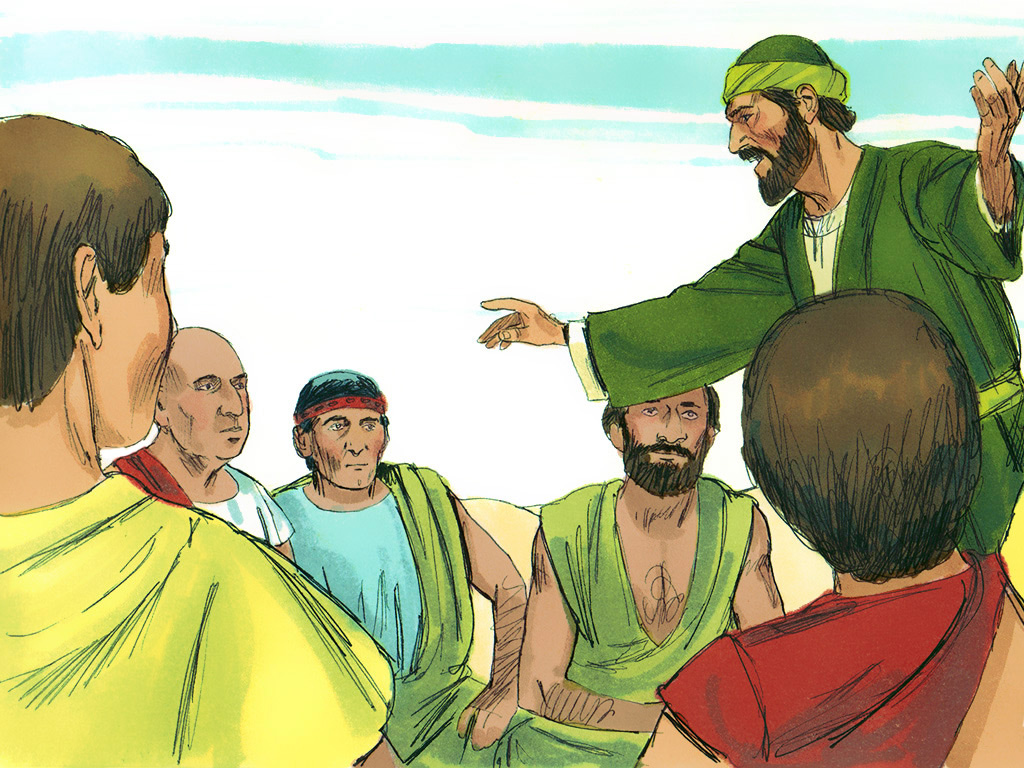
2 Corinthians 4:1-6:2 – A New Creation in Christ

11_Paul_Jerusalem_1024Heaven on Earth was composed by Hilary Stagg (1957-1999), an American musician who, along with fellow new age musician Andreas Vollenweider pioneered the use of the electronic harp.

Cielo en la Tierra fue compuesta por Hilary Stagg ( desde 1957 hasta 1.999 ) , un músico estadounidense que, junto con el también nuevo músico edad Andreas Vollenweider pionero en el uso del arpa electrónica.

Cielo sulla Terra è stata composta da Hilary Stagg ( 1.957-1.999 ) , un musicista americano che, insieme con il collega nuovo musicista età Andreas Vollenweider sperimentato l’uso dell’arpa elettronica .

Source: 2 Corinthians 4:1-6:2  2 Corintios 4:1-6:2(Español)  2 Corinzi 4:1-6:2(Italiano)

2 Corinthians 4:1-6:2

Present Weakness and Resurrection Life

Therefore, since through God’s mercy we have this ministry, we do not lose heart. Rather, we have renounced secret and shameful ways; we do not use deception, nor do we distort the word of God. On the contrary, by setting forth the truth plainly we commend ourselves to everyone’s conscience in the sight of God. And even if our gospel is veiled, it is veiled to those who are perishing. The god of this age has blinded the minds of unbelievers, so that they cannot see the light of the gospel that displays the glory of Christ, who is the image of God. For what we preach is not ourselves, but Jesus Christ as Lord, and ourselves as your servants for Jesus’ sake. For God, who said, “Let light shine out of darkness,”[a] made his light shine in our hearts to give us the light of the knowledge of God’s glory displayed in the face of Christ.

But we have this treasure in jars of clay to show that this all-surpassing power is from God and not from us. We are hard pressed on every side, but not crushed; perplexed, but not in despair; persecuted, but not abandoned; struck down, but not destroyed. 10 We always carry around in our body the death of Jesus, so that the life of Jesus may also be revealed in our body. 11 For we who are alive are always being given over to death for Jesus’ sake, so that his life may also be revealed in our mortal body. 12 So then, death is at work in us, but life is at work in you.

13 It is written: “I believed; therefore I have spoken.”[b] Since we have that same spirit of[c] faith, we also believe and therefore speak, 14 because we know that the one who raised the Lord Jesus from the dead will also raise us with Jesus and present us with you to himself. 15 All this is for your benefit, so that the grace that is reaching more and more people may cause thanksgiving to overflow to the glory of God.

16 Therefore we do not lose heart. Though outwardly we are wasting away, yet inwardly we are being renewed day by day. 17 For our light and momentary troubles are achieving for us an eternal glory that far outweighs them all. 18 So we fix our eyes not on what is seen, but on what is unseen, since what is seen is temporary, but what is unseen is eternal.

Awaiting the New Body

For we know that if the earthly tent we live in is destroyed, we have a building from God, an eternal house in heaven, not built by human hands. Meanwhile we groan, longing to be clothed instead with our heavenly dwelling, because when we are clothed, we will not be found naked. For while we are in this tent, we groan and are burdened, because we do not wish to be unclothed but to be clothed instead with our heavenly dwelling, so that what is mortal may be swallowed up by life. Now the one who has fashioned us for this very purpose is God, who has given us the Spirit as a deposit, guaranteeing what is to come.

Therefore we are always confident and know that as long as we are at home in the body we are away from the Lord. For we live by faith, not by sight. We are confident, I say, and would prefer to be away from the body and at home with the Lord. So we make it our goal to please him, whether we are at home in the body or away from it. 10 For we must all appear before the judgment seat of Christ, so that each of us may receive what is due us for the things done while in the body, whether good or bad.

The Ministry of Reconciliation

11 Since, then, we know what it is to fear the Lord, we try to persuade others. What we are is plain to God, and I hope it is also plain to your conscience. 12 We are not trying to commend ourselves to you again, but are giving you an opportunity to take pride in us, so that you can answer those who take pride in what is seen rather than in what is in the heart. 13 If we are “out of our mind,” as some say, it is for God; if we are in our right mind, it is for you. 14 For Christ’s love compels us, because we are convinced that one died for all, and therefore all died. 15 And he died for all, that those who live should no longer live for themselvesbut for him who died for them and was raised again.

16 So from now on we regard no one from a worldly point of view. Though we once regarded Christ in this way, we do so no longer. 17 Therefore, if anyone is in Christ, the new creation has come:[d] The old has gone, the new is here! 18 All this is from God, who reconciled us to himself through Christ and gave us the ministry of reconciliation: 19 that God was reconciling the world to himself in Christ, not counting people’s sins against them. And he has committed to us the message of reconciliation. 20 We are therefore Christ’s ambassadors, as though God were making his appeal through us. We implore you on Christ’s behalf: Be reconciled to God. 21 God made him who had no sin to be sin[e] for us, so that in him we might become the righteousness of God.

As God’s co-workers we urge you not to receive God’s grace in vain. For he says,

“In the time of my favor I heard you,
    and in the day of salvation I helped you.”[f]

I tell you, now is the time of God’s favor, now is the day of salvation.

Posted in Essential 100 | 3 Comments

1 Corinthians 13:1-13 – The Most Excellent Way

12_Jacob_Wedding_1024_JPEGPachelbel’s Canon is the name commonly given to a canon by the German Baroque composer Johann Pachelbel in his Canon and Gigue for 3 violins and basso continuo, sometimes referred to as Canon and Gigue in D or simply Canon in D. It is his most famous composition.

Canon de Pachelbel es el nombre común dado a un canon por el compositor alemán del barroco Johann Pachelbel en su Canon y Giga para 3 violines y bajo continuo , a veces conocido como Canon y Giga en re o simplemente Canon en D. Es su composición más famosa .

Canone di Pachelbel è il nome comunemente dato ad un canonico dal tedesco compositore barocco Johann Pachelbel nel suo Canone e Giga per 3 violini e basso continuo , a volte indicato come Canon e Gigue in D o semplicemente Canon in D. E ‘la sua composizione più famosa .

Source: 1 Corinthians 13:1-13  1 Corintios 13(Español)  1 Corinzi 13(Italiano)

1 Corinthians 13

13 If I speak in the tongues[a] of men or of angels, but do not have love, I am only a resounding gong or a clanging cymbal. If I have the gift of prophecy and can fathom all mysteries and all knowledge, and if I have a faith that can move mountains, but do not have love, I am nothing. If I give all I possess to the poor and give over my body to hardship that I may boast,[b] but do not have love, I gain nothing.

Love is patient, love is kind. It does not envy, it does not boast, it is not proud. It does not dishonor others, it is not self-seeking, it is not easily angered, it keeps no record of wrongs. Love does not delight in evil but rejoices with the truth. It always protects, always trusts, always hopes, always perseveres.

Love never fails. But where there are prophecies, they will cease; where there are tongues, they will be stilled; where there is knowledge, it will pass away. For we know in part and we prophesy in part, 10 but when completeness comes, what is in part disappears. 11 When I was a child, I talked like a child, I thought like a child, I reasoned like a child. When I became a man, I put the ways of childhood behind me.12 For now we see only a reflection as in a mirror; then we shall see face to face. Now I know in part; then I shall know fully, even as I am fully known.

13 And now these three remain: faith, hope and love. But the greatest of these is love.

Posted in Essential 100 | 2 Comments

1 Thessalonians 4:13-5:11 – The Coming of the Lord

11_Paul_Athens_1024

St Paul’s Suite (Op. 29, No. 2), originally titled Suite in C, is a composition for string orchestra by the English composer Gustav Holst. It was written in 1912, but due to revisions was not published until 1922. It is named after the St Paul’s Girls’ School in the United Kingdom, where Holst was Director of Music from 1905 to 1934. It was written in gratitude to the school which had built a soundproof studio for him. This suite is the most famous of the many pieces he wrote for students at St. Paul’s.

Suite de San Pablo ( Op. 29 , No. 2 ) Suite, titulado originalmente en C , es una composición para orquesta de cuerdas del compositor Inglés Gustav Holst . Fue escrito en 1912 , pero debido a las revisiones no se publicó hasta 1922. Lleva el nombre de la escuela de San Pablo de las niñas en el Reino Unido, donde Holst fue Director de Música de 1905 a 1934. Fue escrito en gratitud a la escuela que se había construido un estudio insonorizado para él. Esta suite es la más famosa de las muchas piezas que escribió para los estudiantes de St. Paul de .

Suite di San Paolo ( Op . 29 , No. 2 ) Suite , originariamente intitolato a C , è una composizione per orchestra d’archi dal compositore inglese Gustav Holst . È stato scritto nel 1912 , ma a causa di revisioni non è stato pubblicato fino al 1922. Il suo nome deriva scuola nel Regno Unito , dove Holst fu direttore musicale dal 1905 al 1934. E ‘stato scritto in segno di gratitudine per la scuola di San Paolo Girls’ che aveva costruito uno studio insonorizzato per lui . Questa suite è il più famoso dei molti pezzi che ha scritto per gli studenti di St. Paul di .

Source: 1 Thessalonians 4:13-5:11  1 Tesalonicenses 4:13-5:11(Español)  1 Tessalonicesi 4:13-5:119(Italiano)

1 Thessalonians 4:13-5:11

Believers Who Have Died

13 Brothers and sisters, we do not want you to be uninformed about those who sleep in death, so that you do not grieve like the rest of mankind, who have no hope. 14 For we believe that Jesus died and rose again, and so we believe that God will bring with Jesus those who have fallen asleep in him. 15 According to the Lord’s word, we tell you that we who are still alive, who are left until the coming of the Lord, will certainly not precede those who have fallen asleep. 16 For the Lord himself will come down from heaven,with a loud command, with the voice of the archangel and with the trumpet call of God, and the dead in Christ will rise first. 17 After that, we who are still alive and are left will be caught up together with them in the clouds to meet the Lord in the air. And so we will be with the Lord forever. 18 Therefore encourage one another with these words.

The Day of the Lord

Now, brothers and sisters, about times and dates we do not need to write to you, for you know very well that the day of the Lord will come like a thief in the night. While people are saying, “Peace and safety,” destruction will come on them suddenly, as labor pains on a pregnant woman, and they will not escape.

But you, brothers and sisters, are not in darkness so that this day should surprise you like a thief. You are all children of the light and children of the day. We do not belong to the night or to the darkness. So then, let us not be like others, who are asleep, but let us be awake and sober. For those who sleep, sleep at night, and those who get drunk, get drunk at night. But since we belong to the day, let us be sober, putting on faith and love as a breastplate, and the hope of salvation as a helmet. For God did not appoint us to suffer wrath but to receive salvation through our Lord Jesus Christ. 10 He died for us so that, whether we are awake or asleep, we may live together with him. 11 Therefore encourage one another and build each other up, just as in fact you are doing.

Posted in Essential 100 | 2 Comments